A Deli, Bar, and Restaurant for the heart of Amersfoort
Madonna
In the charming Krommestraat in Amersfoort, Positive Space has designed the restaurant, bar, and deli Madonna: an all-day restaurant in a fully restored 16th-century building. Through a clever layout featuring a central core of steel and wood, the firm managed to maintain the historical ambiance while simultaneously creating a spacious, distinctive interior. The result is an energy-neutral Italian restaurant with metropolitan allure.
Program
Client
Location
Year
Status
Area
Photography
Hospitality
Madonna BV
Amersfoort
2016 - 2017
Completed
325m²
Wouter van der Sar
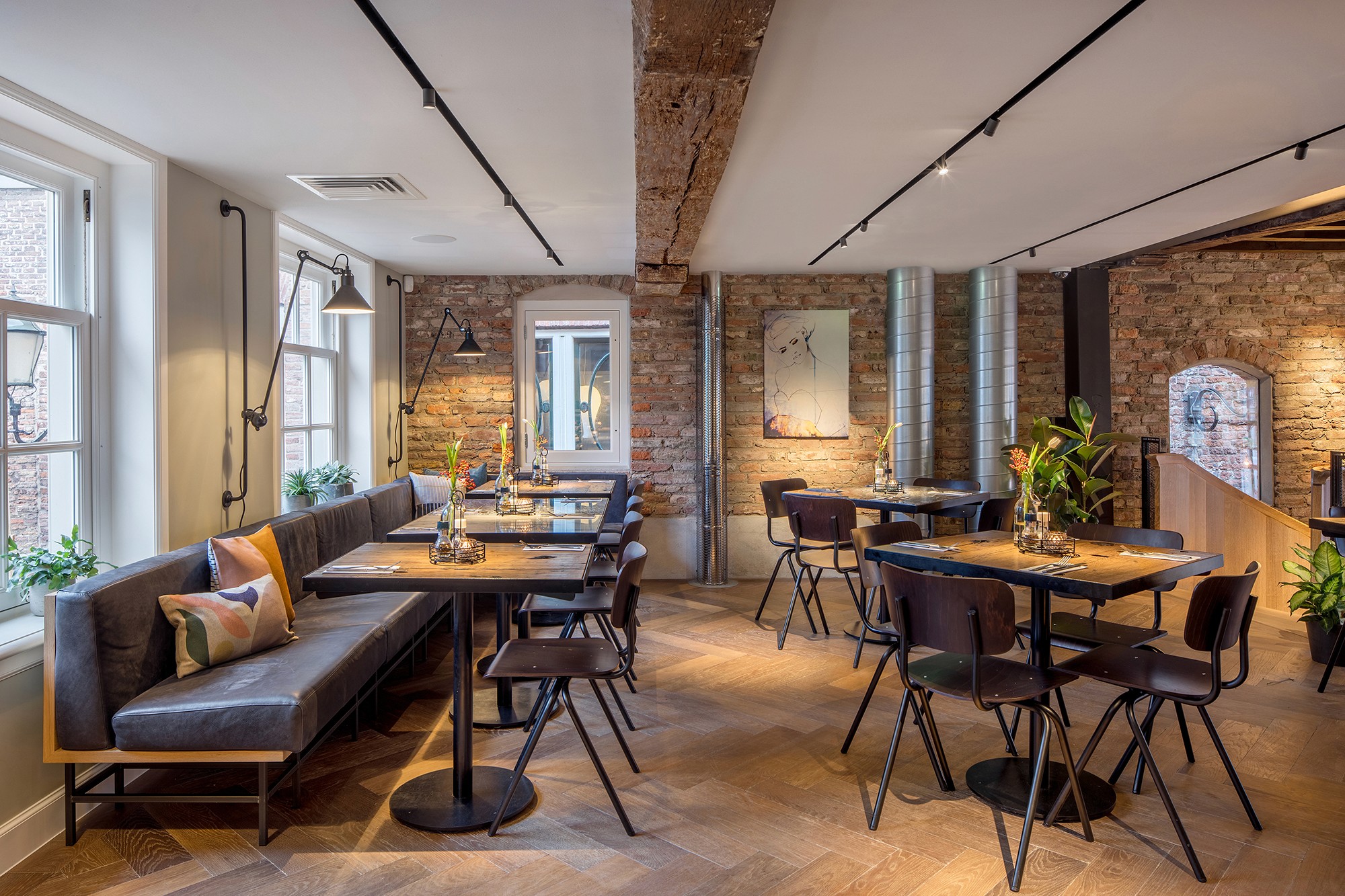
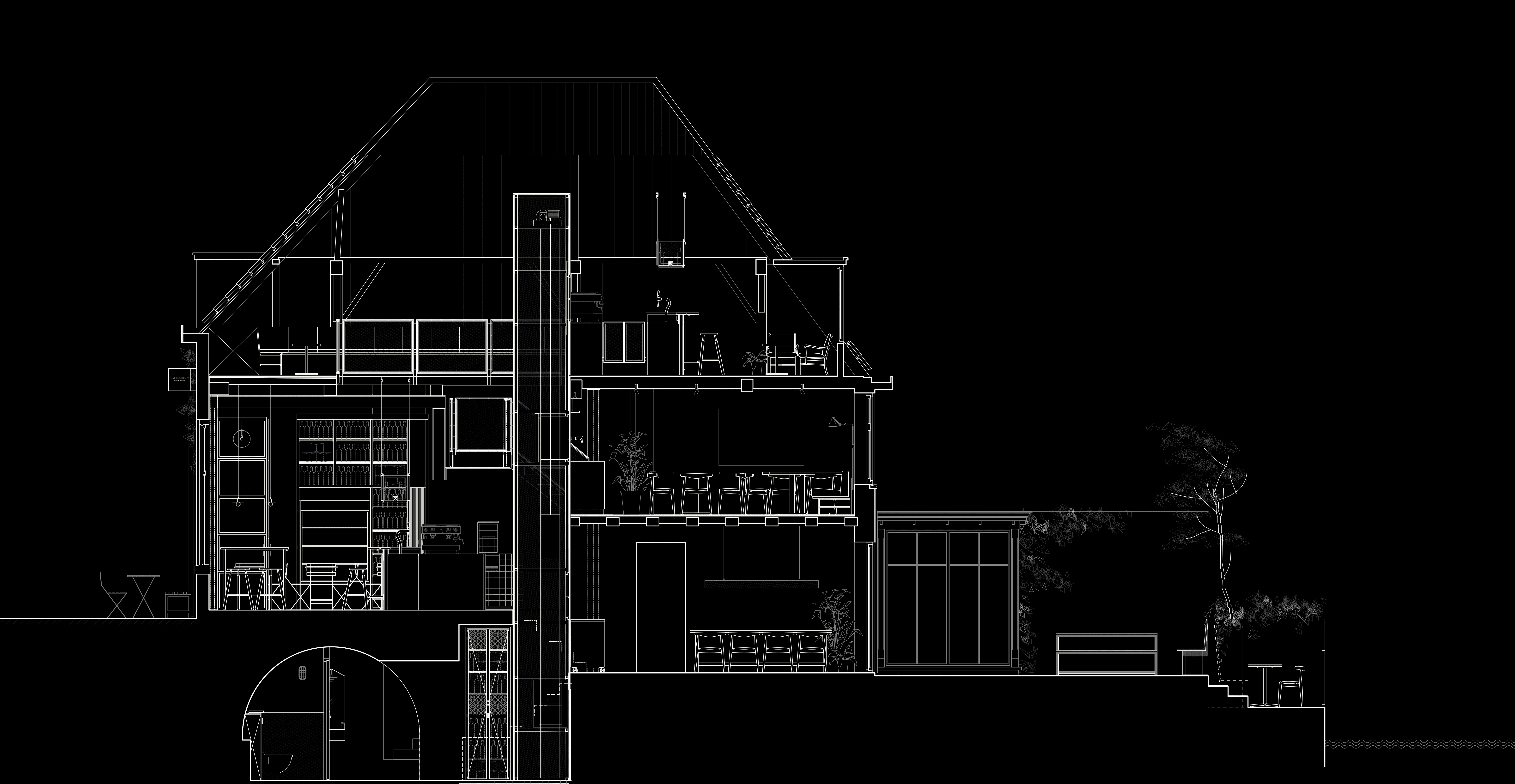
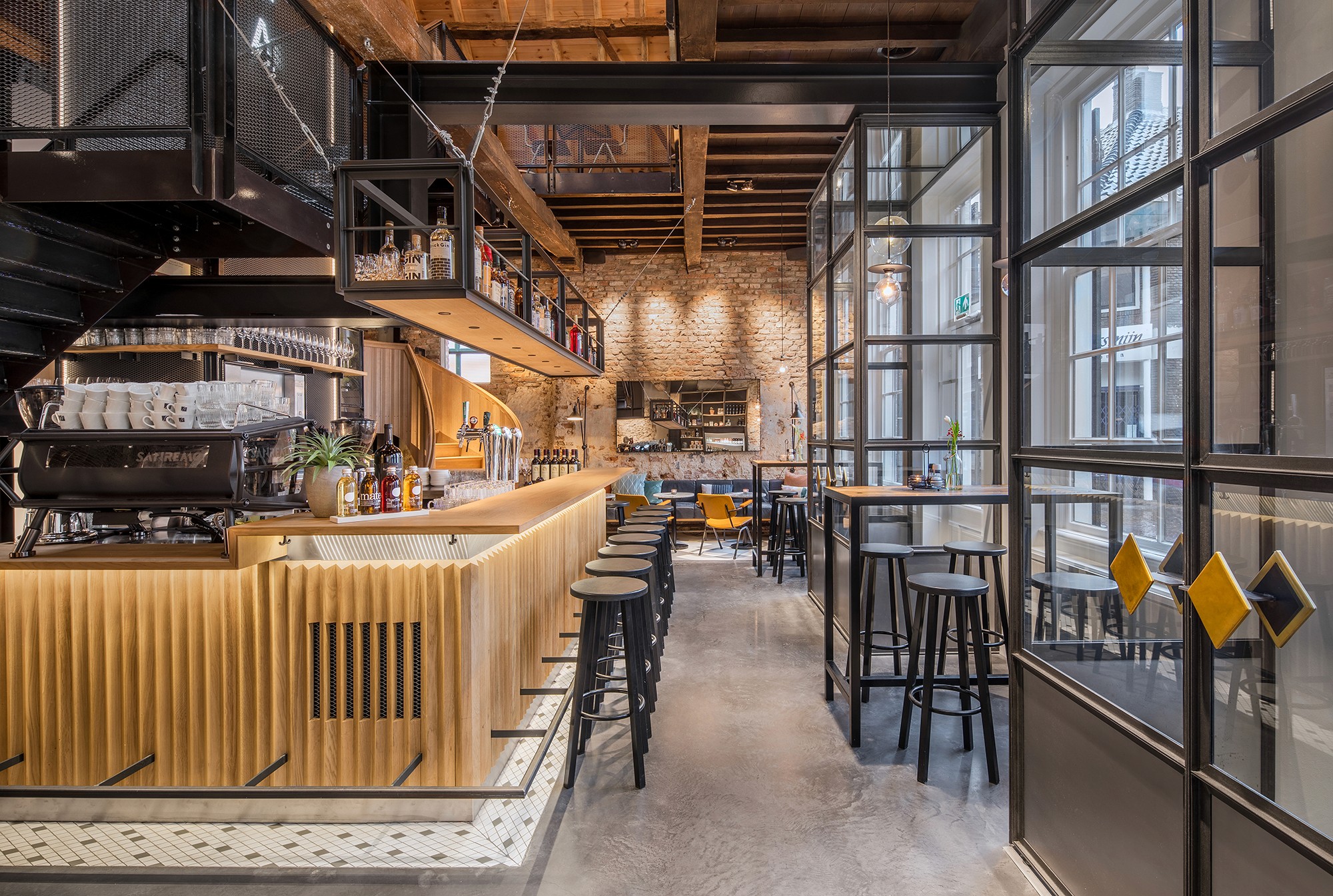
Amersfoort is a city in full development but until recently missed a restaurant with metropolitan allure. The 16th-century building, after serving as a shop for over a century, was in dire need of a thorough restoration, which also provided the opportunity to create a new function. Externally, the building is characterized by a single floor and a roof, while the interior consists of four split-level floors.
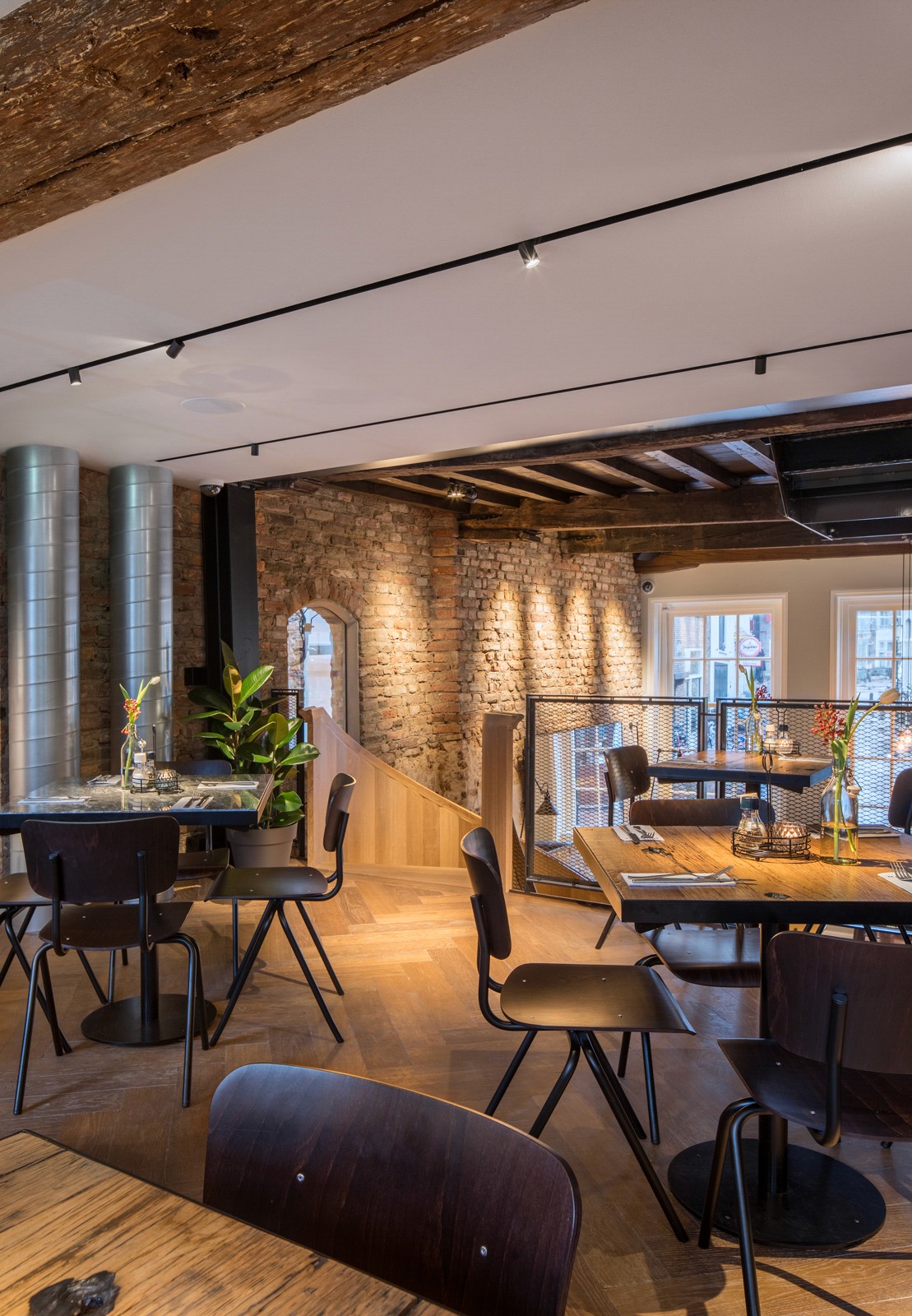
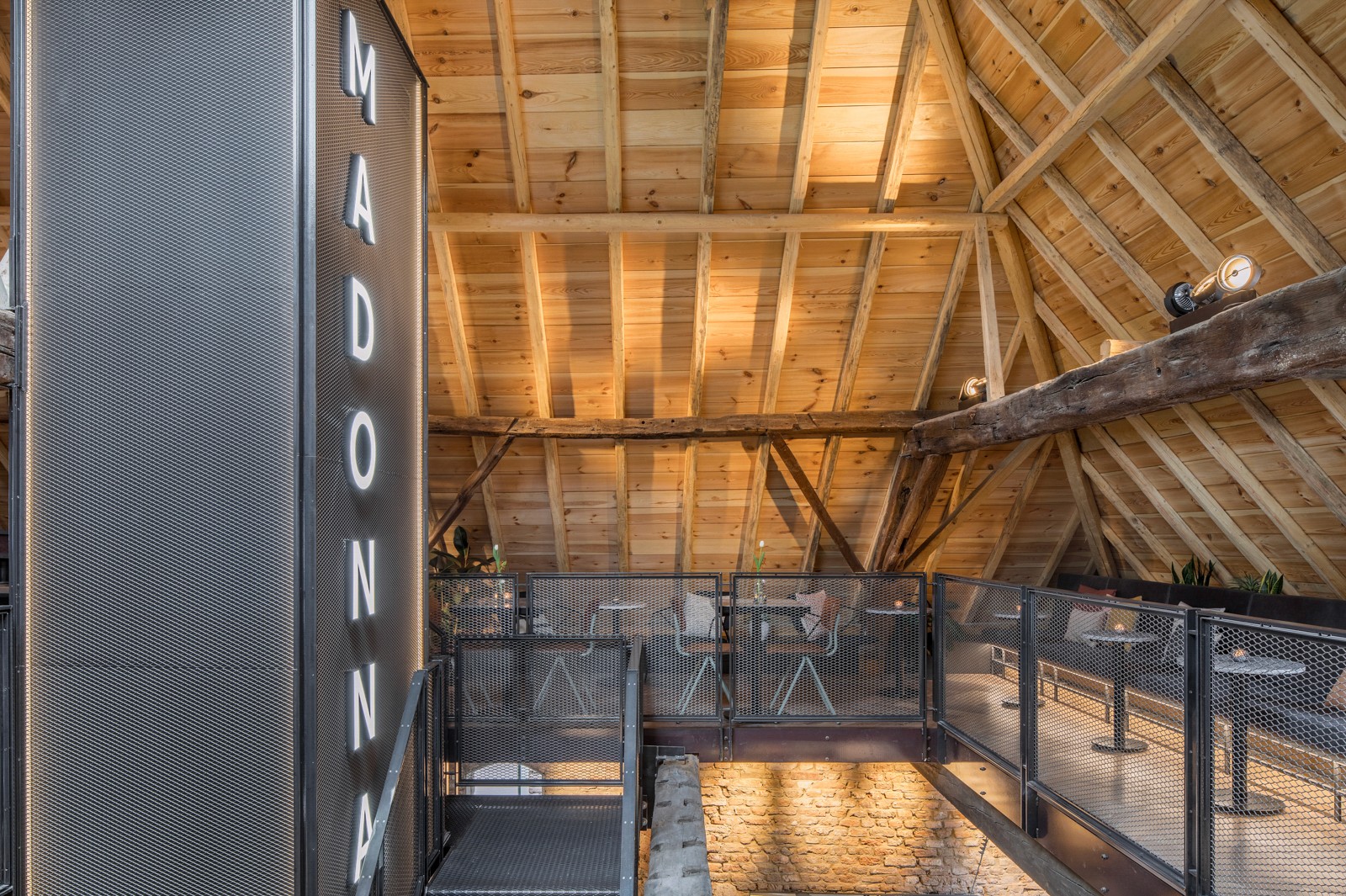
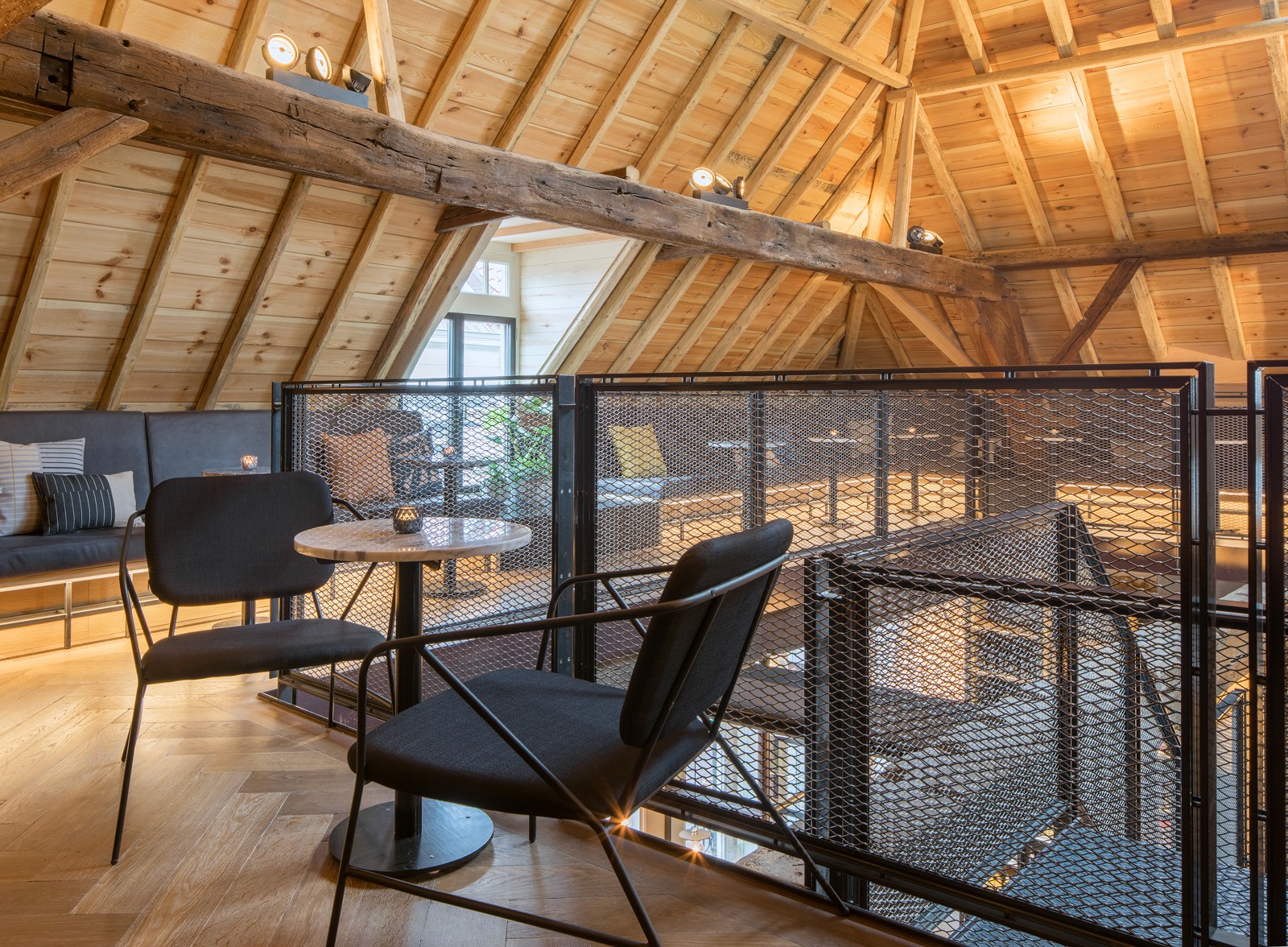
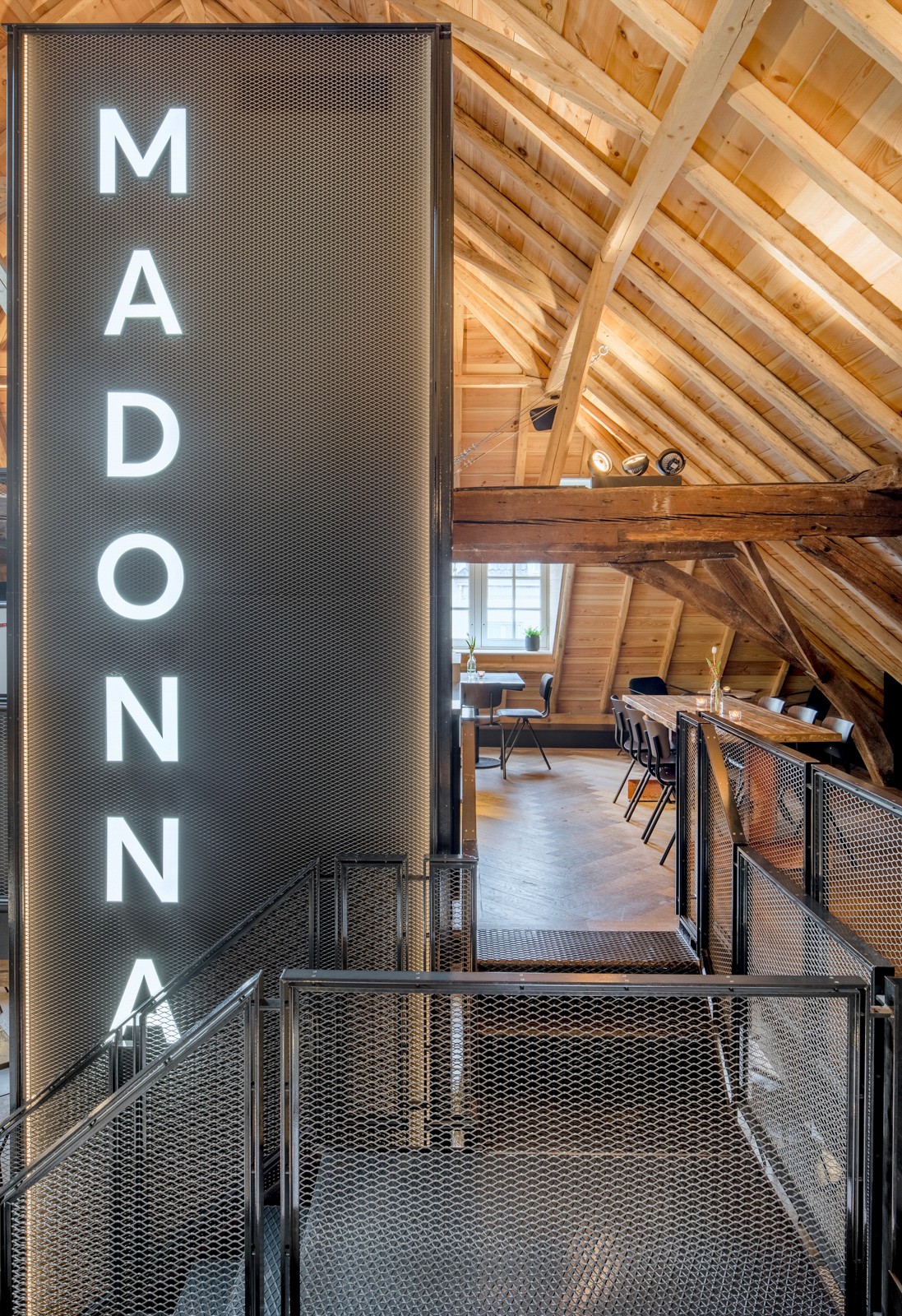
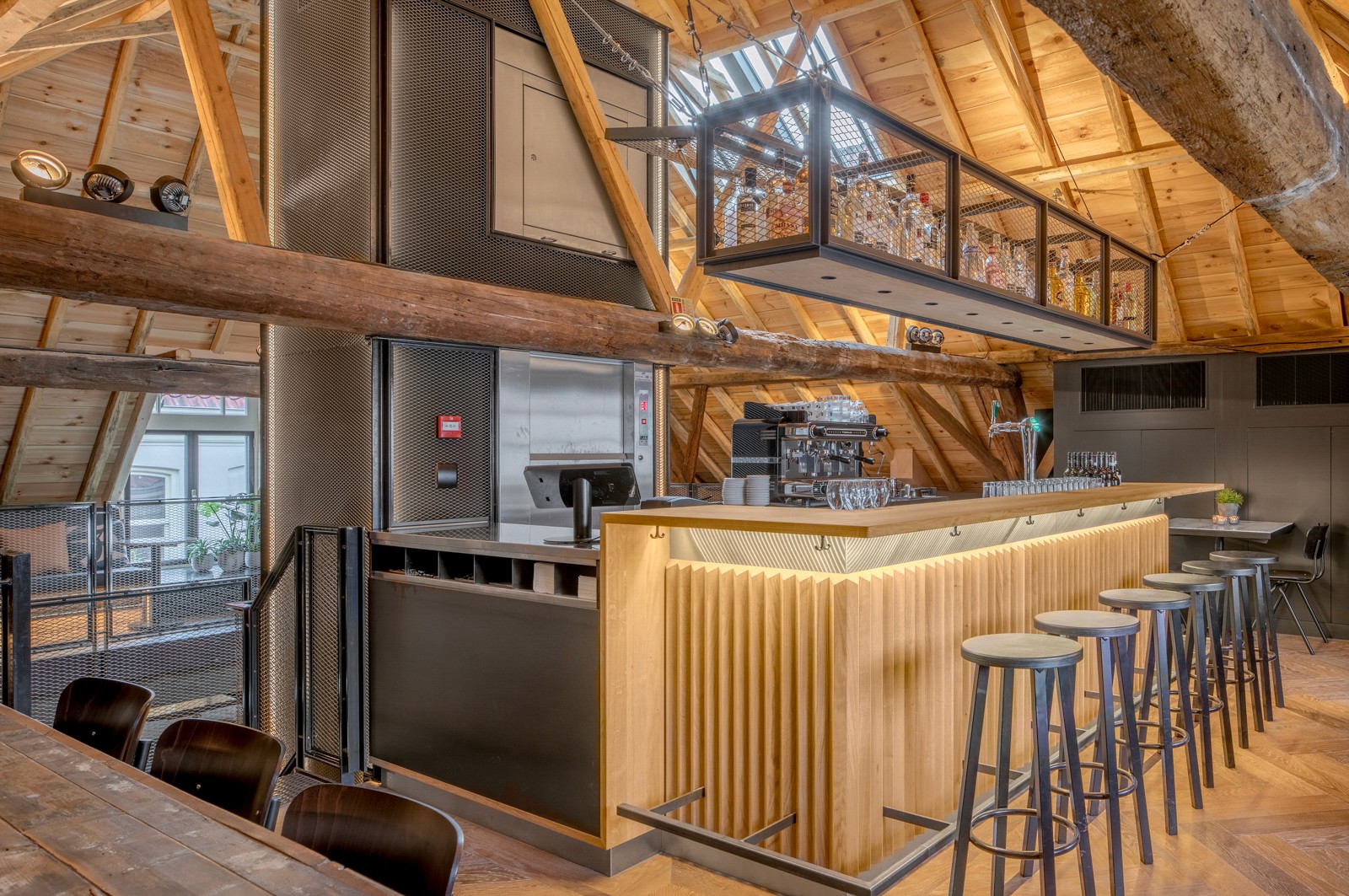
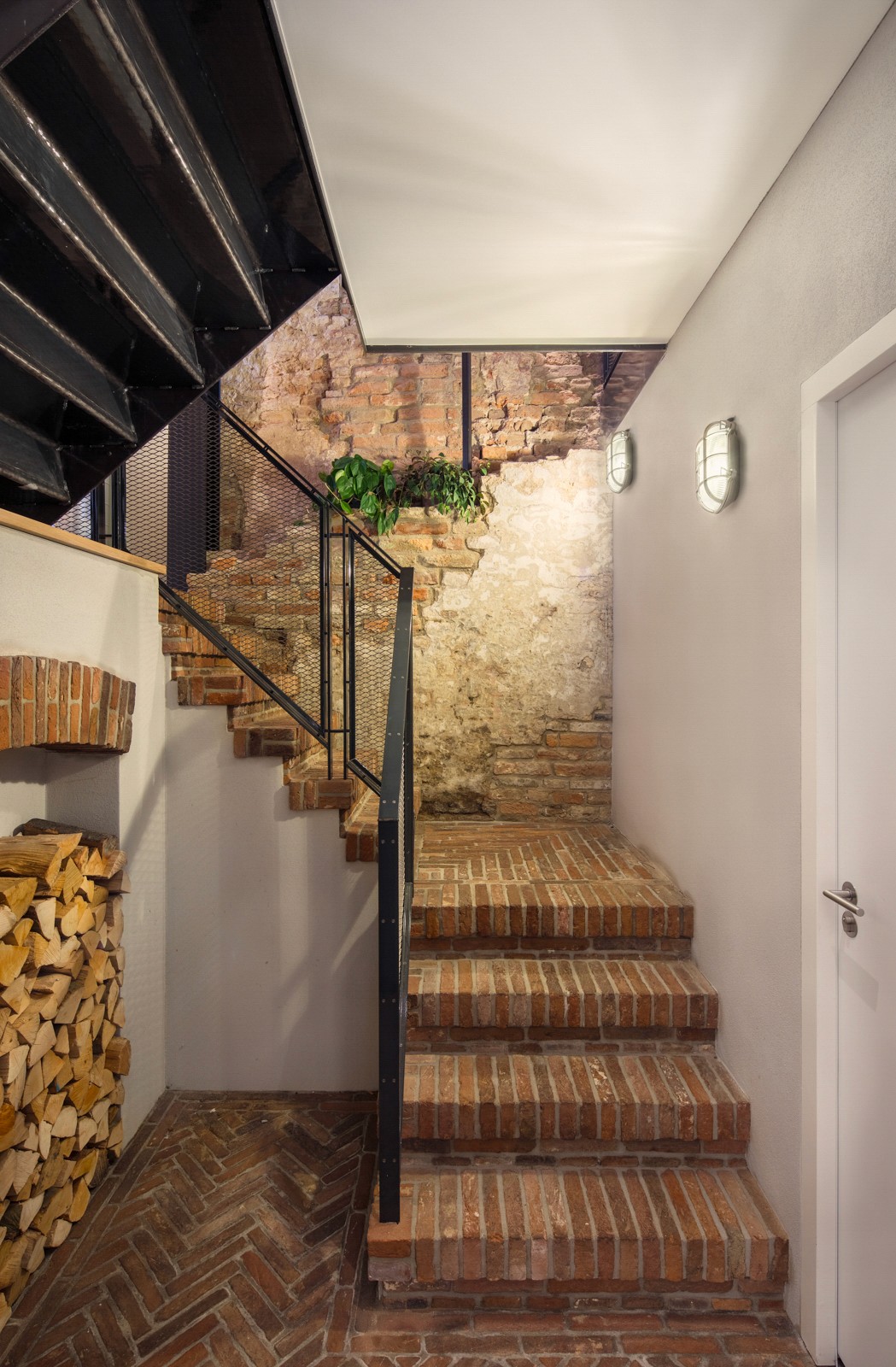
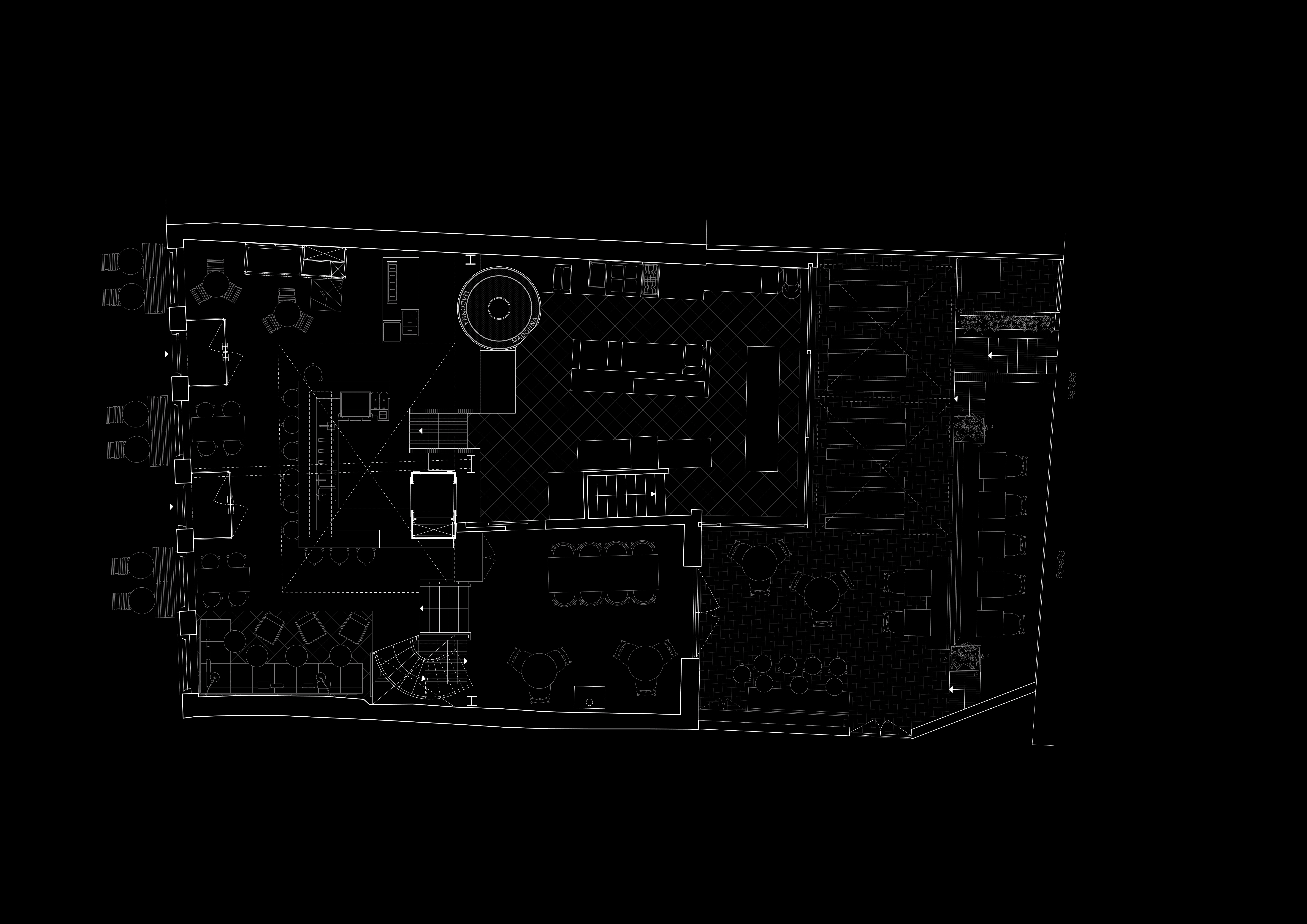
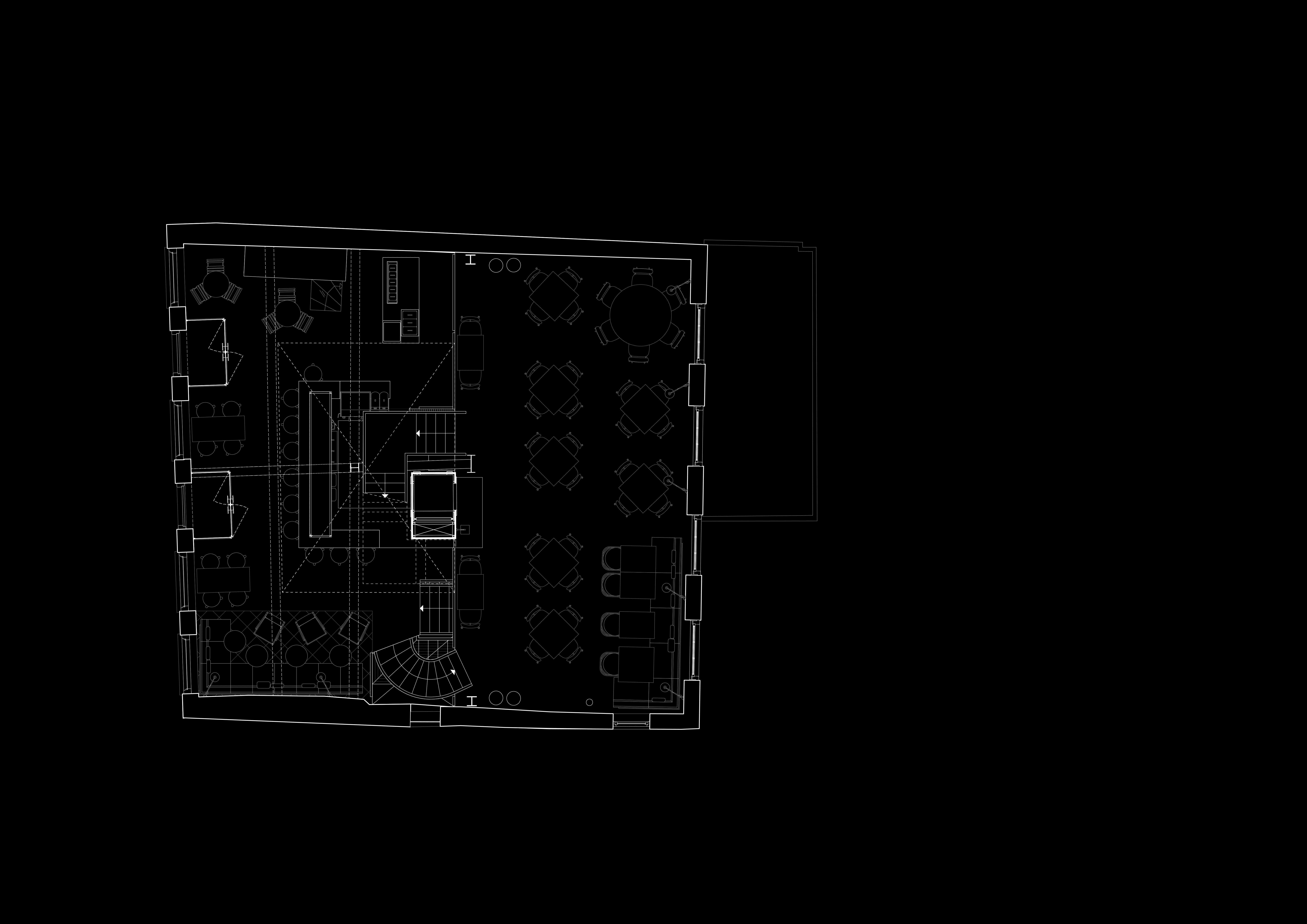
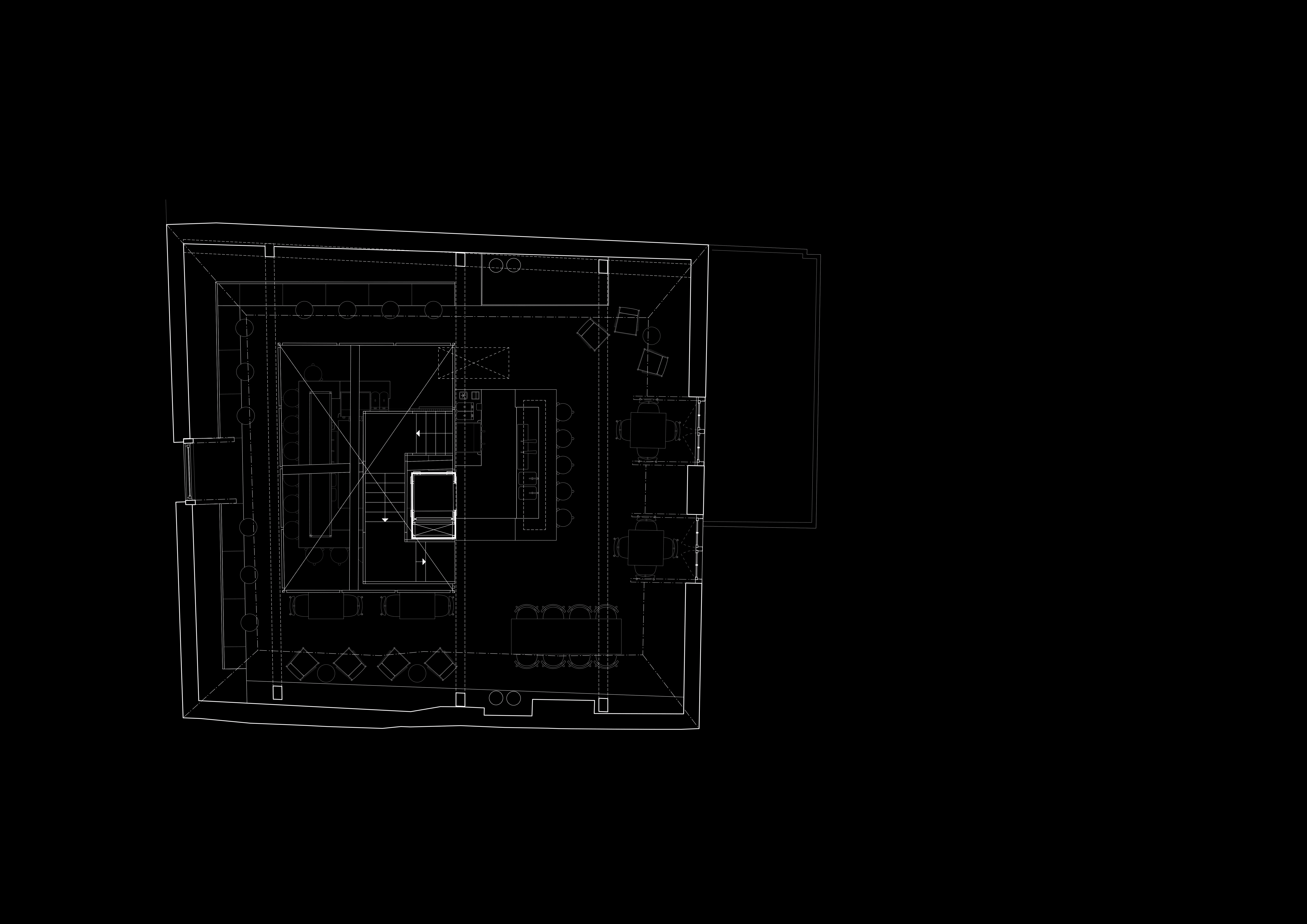
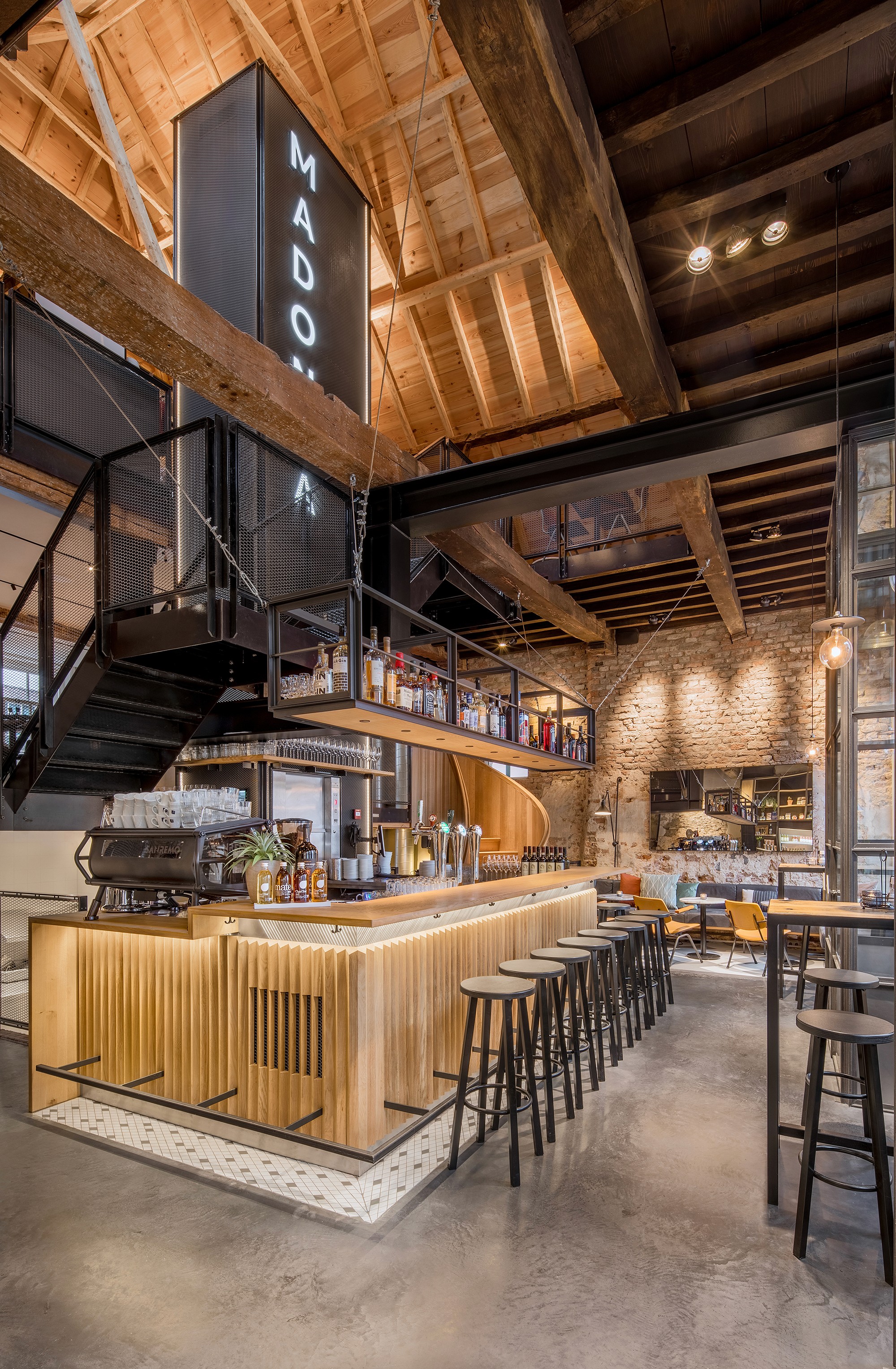
To preserve the historical context as much as possible, also because of its monumental nature, the strategy has been to leave all exterior walls untouched. Instead, by introducing a central core that includes the bars and access to the restaurant, the spatiality of the building has been enhanced. At the heart of this core is a goods lift, clad with expanded metal. The core also contributes to the structural strengthening of the building. On the various levels, bars and cutlery stations are placed around this core. The stairs running around the core connect all the split levels and converge in a large atrium that links the imposing roof to the underlying floors. This creates numerous sightlines within the interior, encourages social interaction, and gives the whole a pleasant scale.
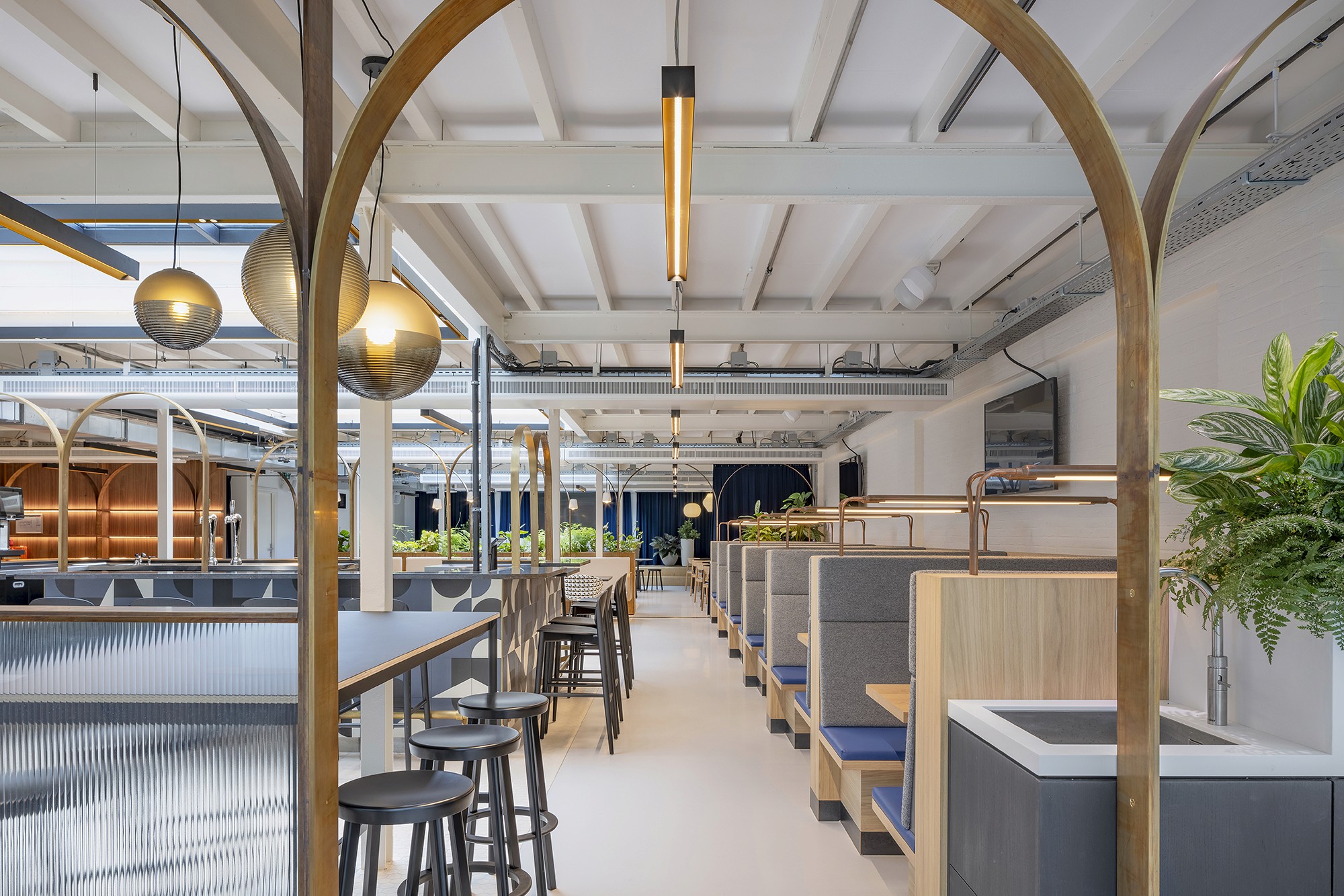
The interior has an industrial character, designed with respect for the historic building. Contractor Van de Burgt and Strooij took advantage of the restoration to make the building completely energy-neutral.
Madonna
In the charming Krommestraat in Amersfoort, Positive Space has designed the restaurant, bar, and deli Madonna: an all-day restaurant in a fully restored 16th-century building. Through a clever layout featuring a central core of steel and wood, the firm managed to maintain the historical ambiance while simultaneously creating a spacious, distinctive interior. The result is an energy-neutral Italian restaurant with metropolitan allure.
Program
Client
Location
Year
Status
Area
Photography
Hospitality
Madonna BV
Amersfoort
2016 - 2017
Completed
325m²
Wouter van der Sar
Amersfoort is a city in full development but until recently missed a restaurant with metropolitan allure. The 16th-century building, after serving as a shop for over a century, was in dire need of a thorough restoration, which also provided the opportunity to create a new function. Externally, the building is characterized by a single floor and a roof, while the interior consists of four split-level floors.
To preserve the historical context as much as possible, also because of its monumental nature, the strategy has been to leave all exterior walls untouched. Instead, by introducing a central core that includes the bars and access to the restaurant, the spatiality of the building has been enhanced. At the heart of this core is a goods lift, clad with expanded metal. The core also contributes to the structural strengthening of the building. On the various levels, bars and cutlery stations are placed around this core. The stairs running around the core connect all the split levels and converge in a large atrium that links the imposing roof to the underlying floors. This creates numerous sightlines within the interior, encourages social interaction, and gives the whole a pleasant scale.
The interior has an industrial character, designed with respect for the historic building. Contractor Van de Burgt and Strooij took advantage of the restoration to make the building completely energy-neutral.
Madonna
In the charming Krommestraat in Amersfoort, Positive Space has designed the restaurant, bar, and deli Madonna: an all-day restaurant in a fully restored 16th-century building. Through a clever layout featuring a central core of steel and wood, the firm managed to maintain the historical ambiance while simultaneously creating a spacious, distinctive interior. The result is an energy-neutral Italian restaurant with metropolitan allure.
Program
Client
Location
Year
Status
Area
Photography
Hospitality
Madonna BV
Amersfoort
2016 - 2017
Completed
325m²
Wouter van der Sar
Amersfoort is a city in full development but until recently missed a restaurant with metropolitan allure. The 16th-century building, after serving as a shop for over a century, was in dire need of a thorough restoration, which also provided the opportunity to create a new function. Externally, the building is characterized by a single floor and a roof, while the interior consists of four split-level floors.
To preserve the historical context as much as possible, also because of its monumental nature, the strategy has been to leave all exterior walls untouched. Instead, by introducing a central core that includes the bars and access to the restaurant, the spatiality of the building has been enhanced. At the heart of this core is a goods lift, clad with expanded metal. The core also contributes to the structural strengthening of the building. On the various levels, bars and cutlery stations are placed around this core. The stairs running around the core connect all the split levels and converge in a large atrium that links the imposing roof to the underlying floors. This creates numerous sightlines within the interior, encourages social interaction, and gives the whole a pleasant scale.
The interior has an industrial character, designed with respect for the historic building. Contractor Van de Burgt and Strooij took advantage of the restoration to make the building completely energy-neutral.
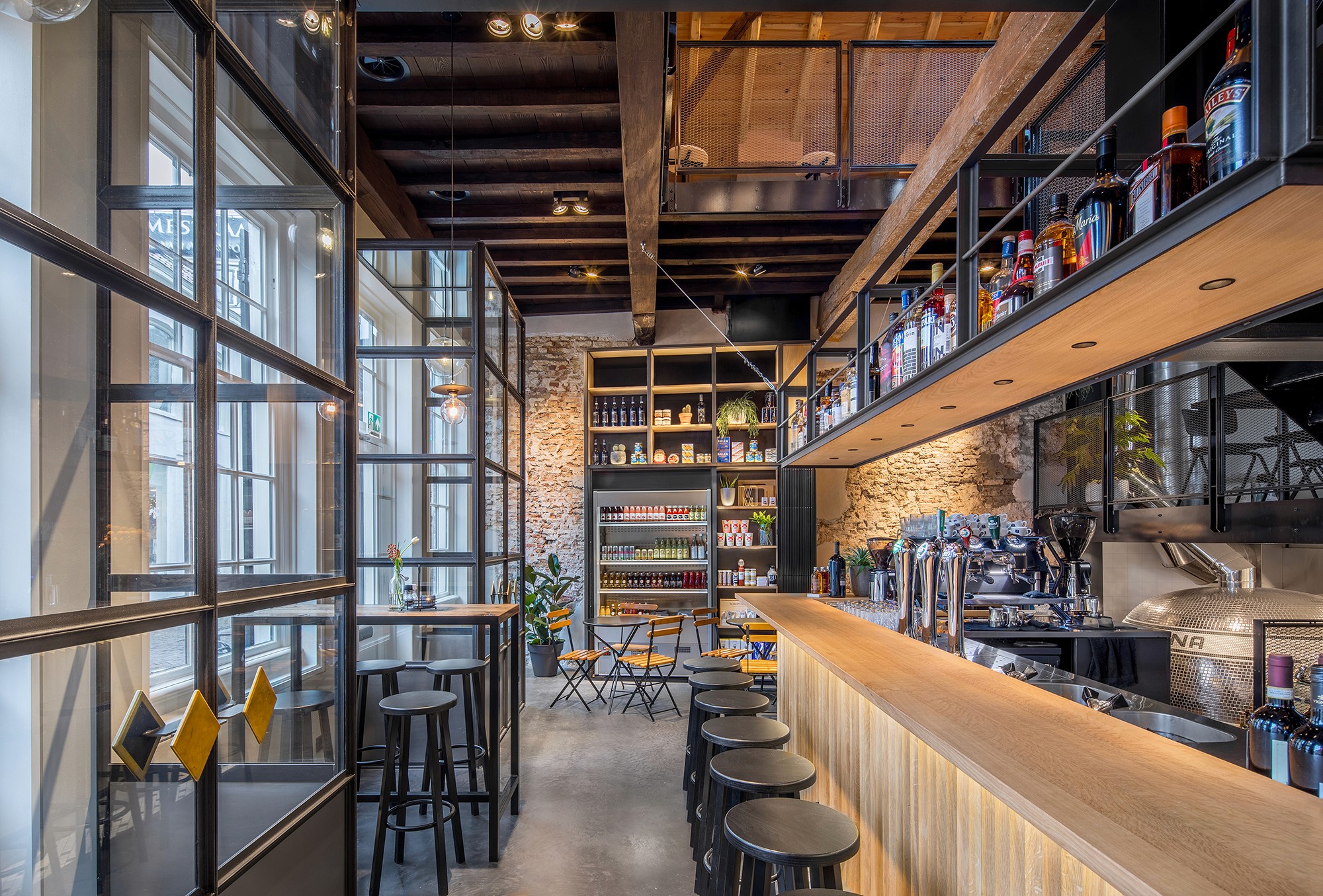
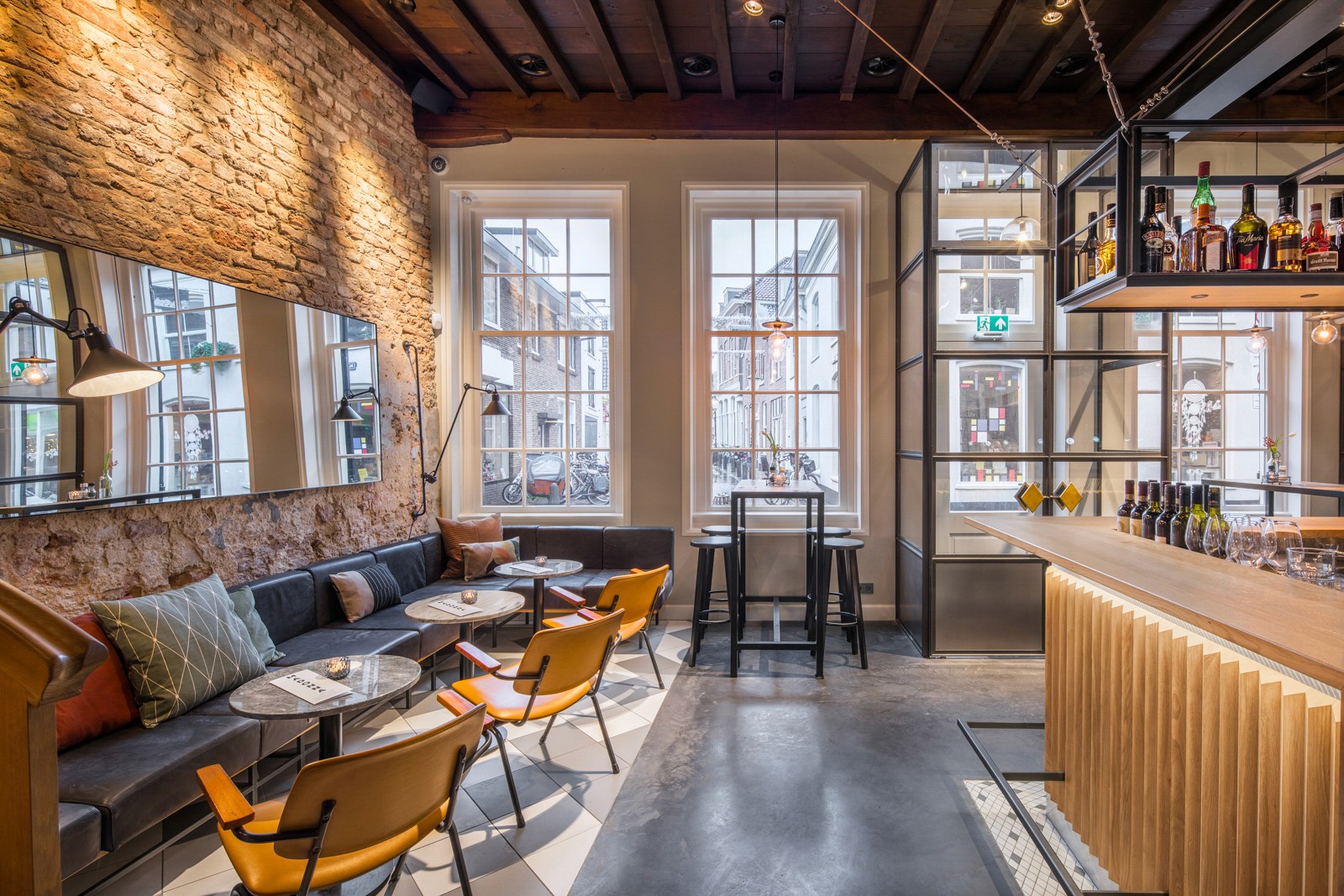
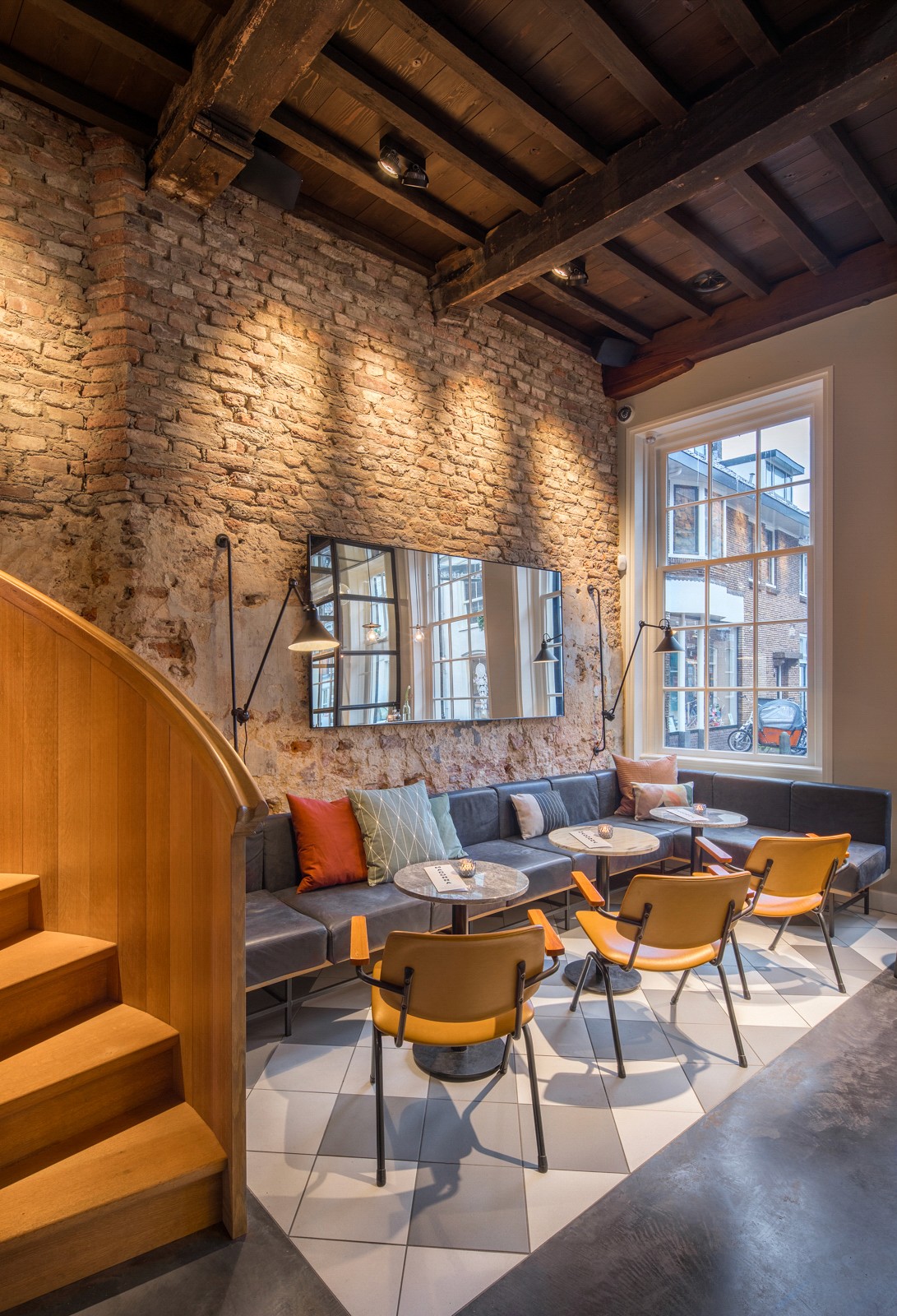
The ground floor facade features two front doors, each leading through a blue steel vestibule. These open up to the centrally placed, wood-clad bar, from which a steel bar rack hangs above. To the left of the bar is the to-go deli offering freshly prepared food to take away. On the right is a spacious lounge area, with stairs leading to the garden room and mezzanine.
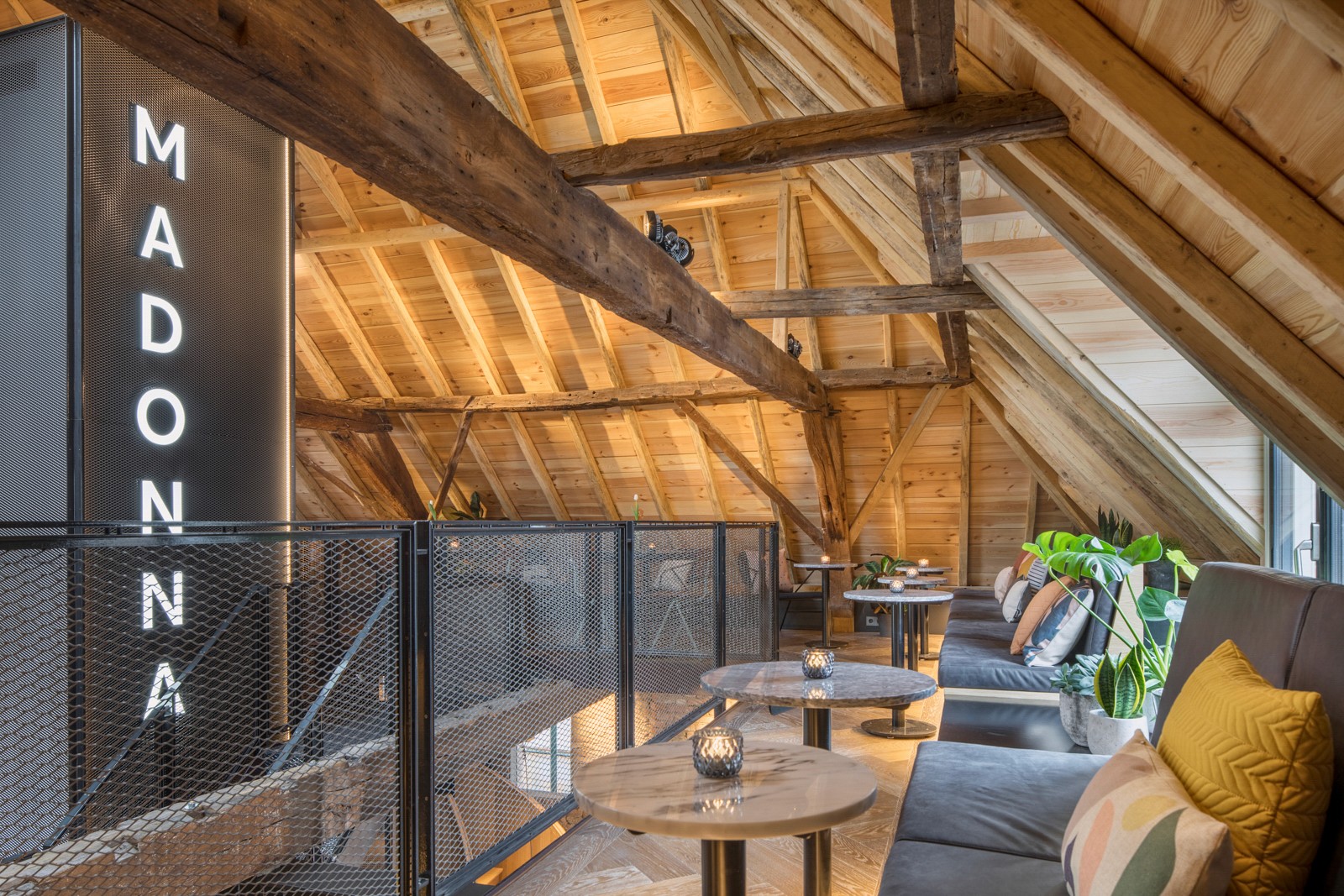
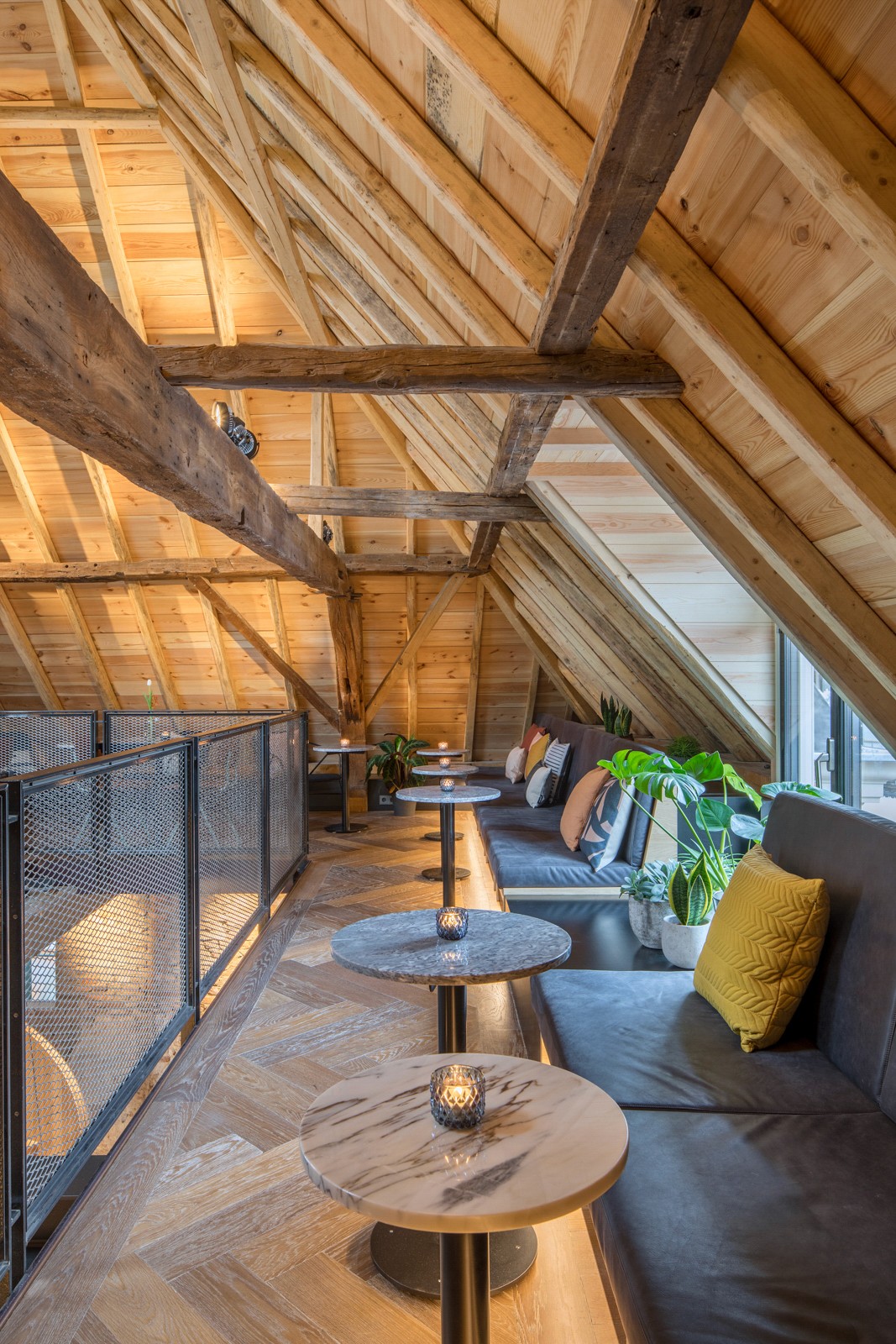
At the mezzanine level lies the heart of Madonna's dining area. With various table configurations, it accommodates a variety of gatherings. From the mezzanine, a steel staircase, suspended in the atrium, ascends to the loft. Here, a long bench circles the atrium under the impressive roof, inviting guests to enjoy cocktails. A second bar is located here, along with a magnificent view of the Onze Lieve Vrouwe Toren, from which Madonna takes her name.
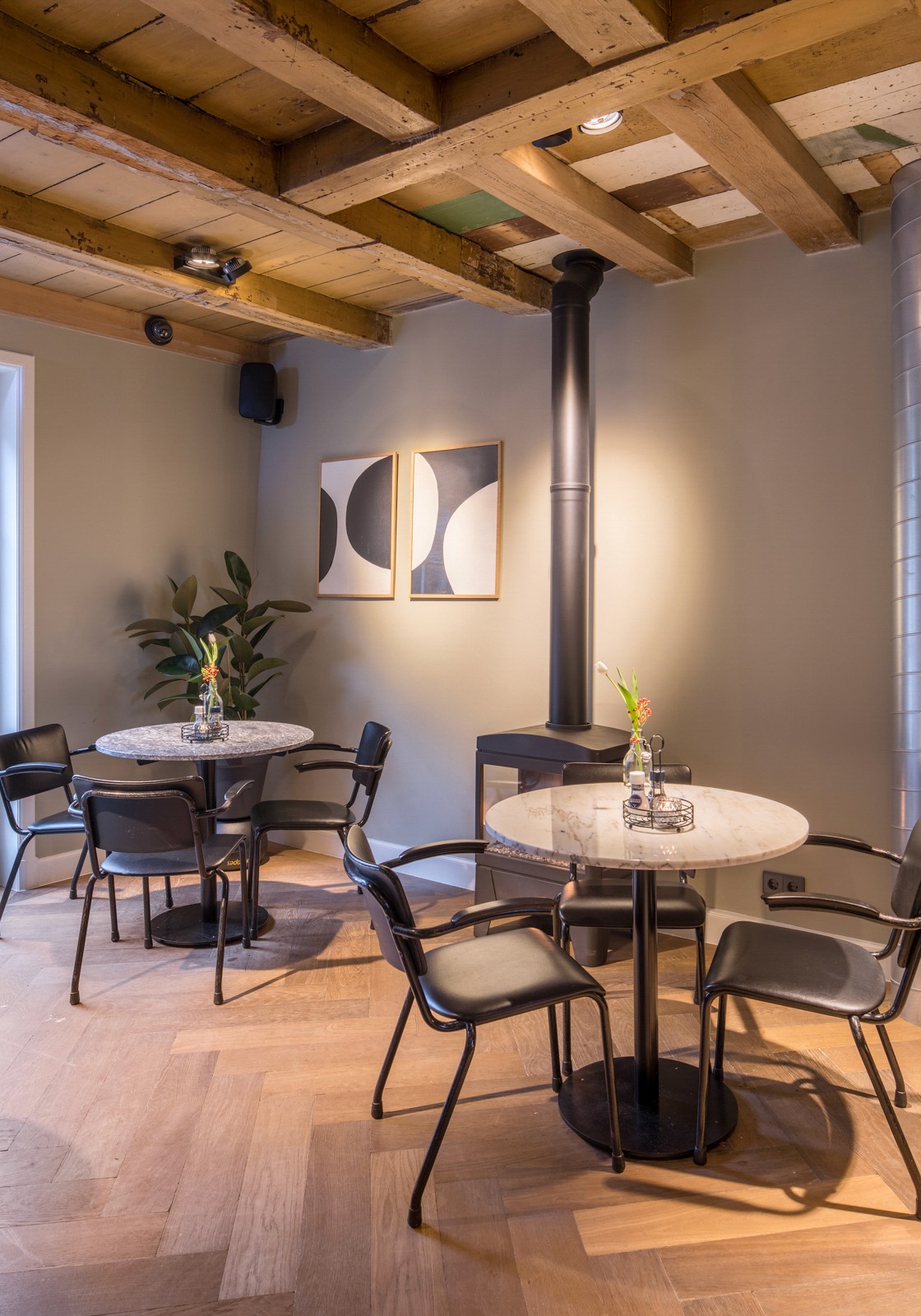
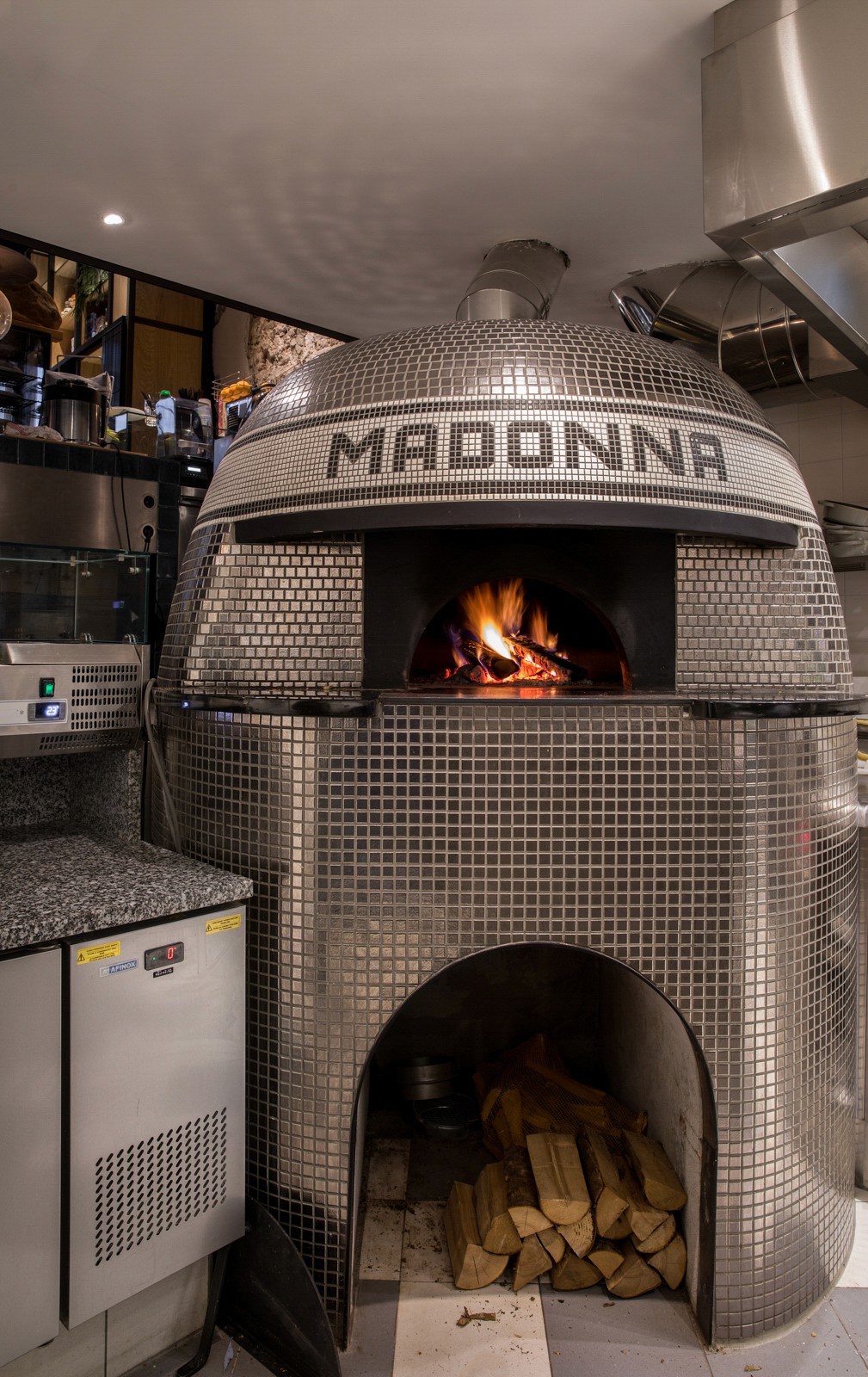
At the rear of the building, overlooking the Lange Gracht and half a floor lower, is the garden room with an open fireplace and doors opening onto the terrace, as well as the kitchen, featuring a wood-fired pizza oven.
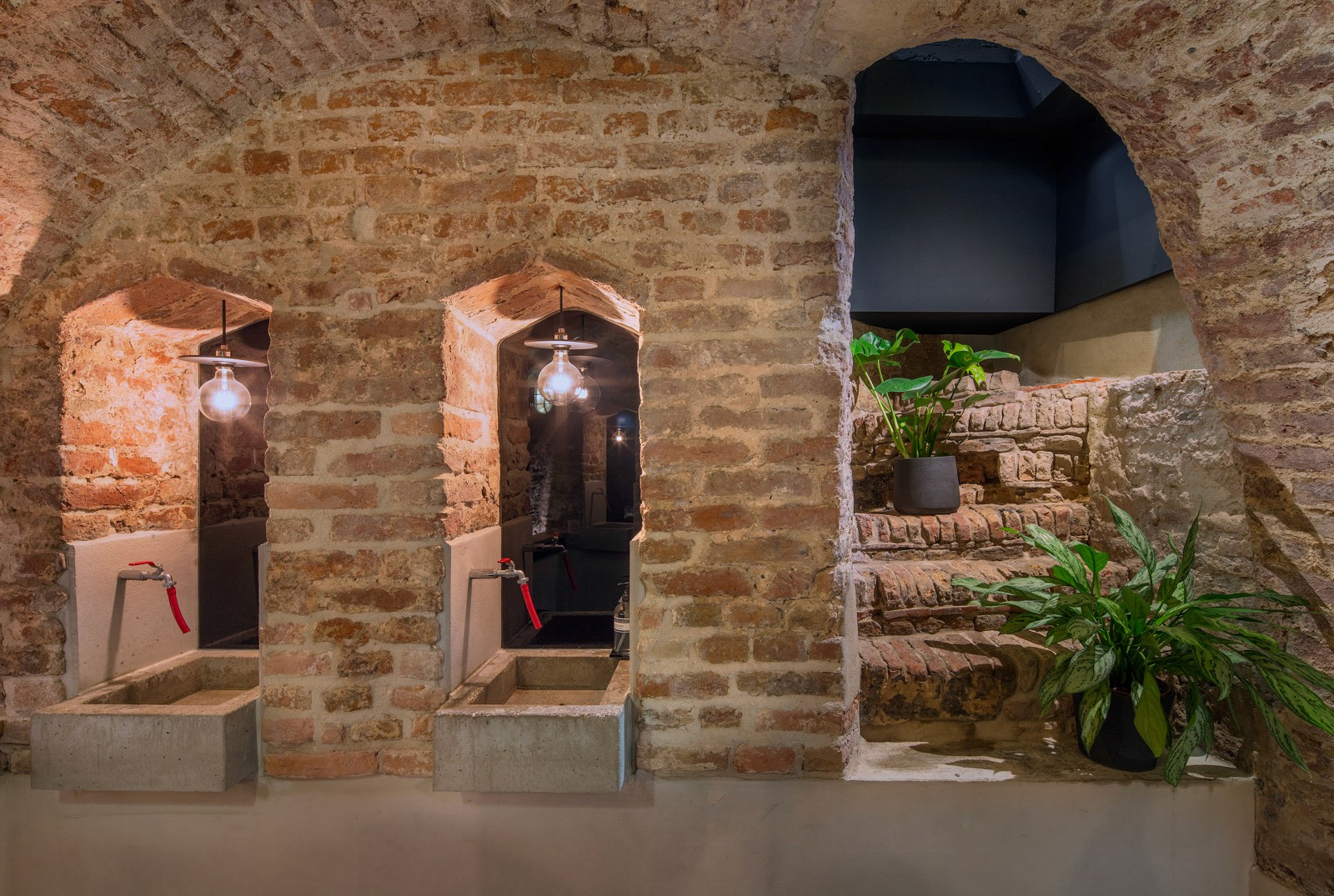
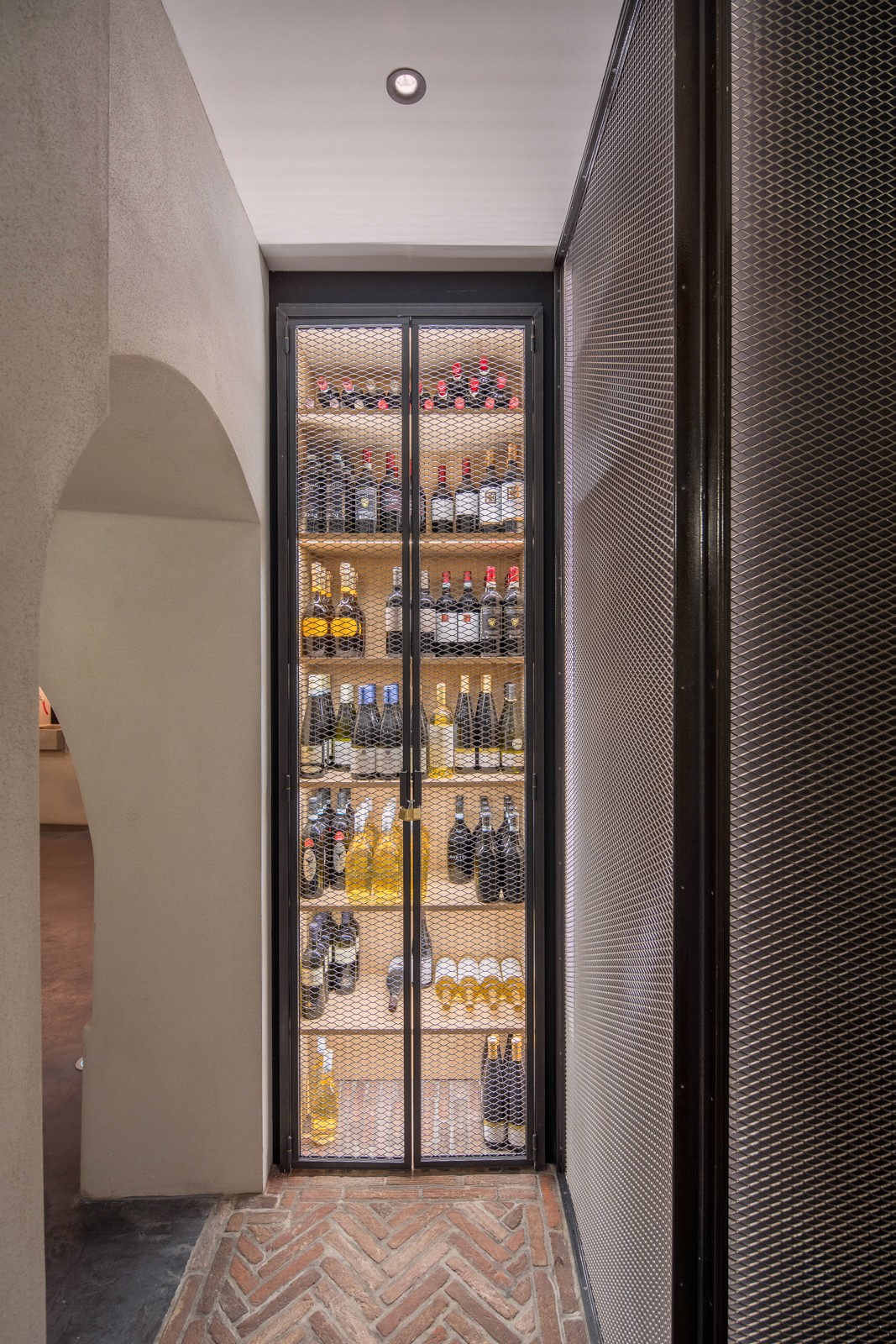
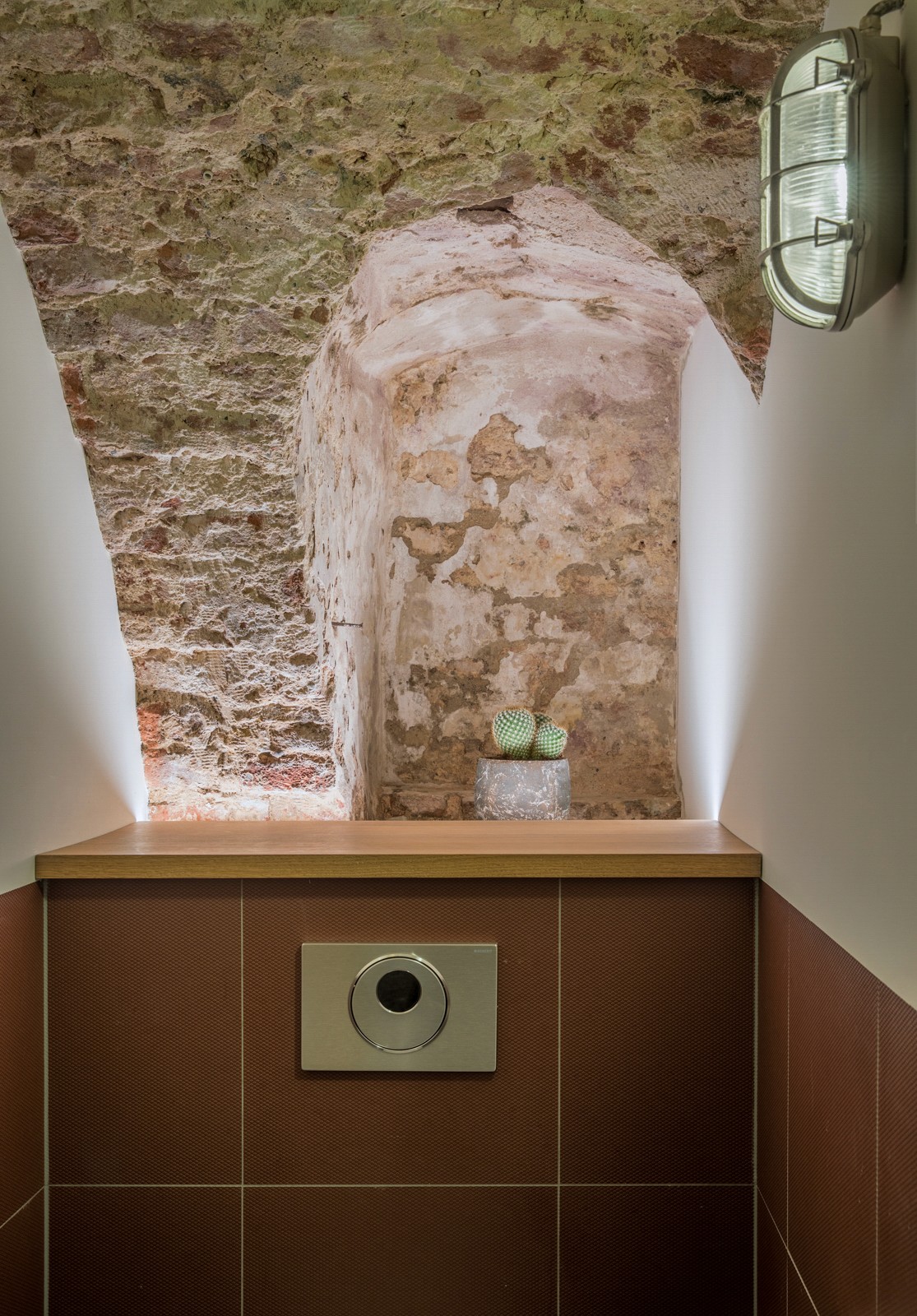
Beneath the building, a fully intact historical vault remains. By further excavating this floor, the vault has been transformed into a restroom area. Custom-molded basins are now placed in the former candle niches. With a clever layout and use of mirrors, the space feels expansive. On the way to the restrooms, a custom-made wine cabinet stands, and space has been created for storing wood logs. Beneath the kitchen, a new cellar has been constructed for cooling units.
The smart core
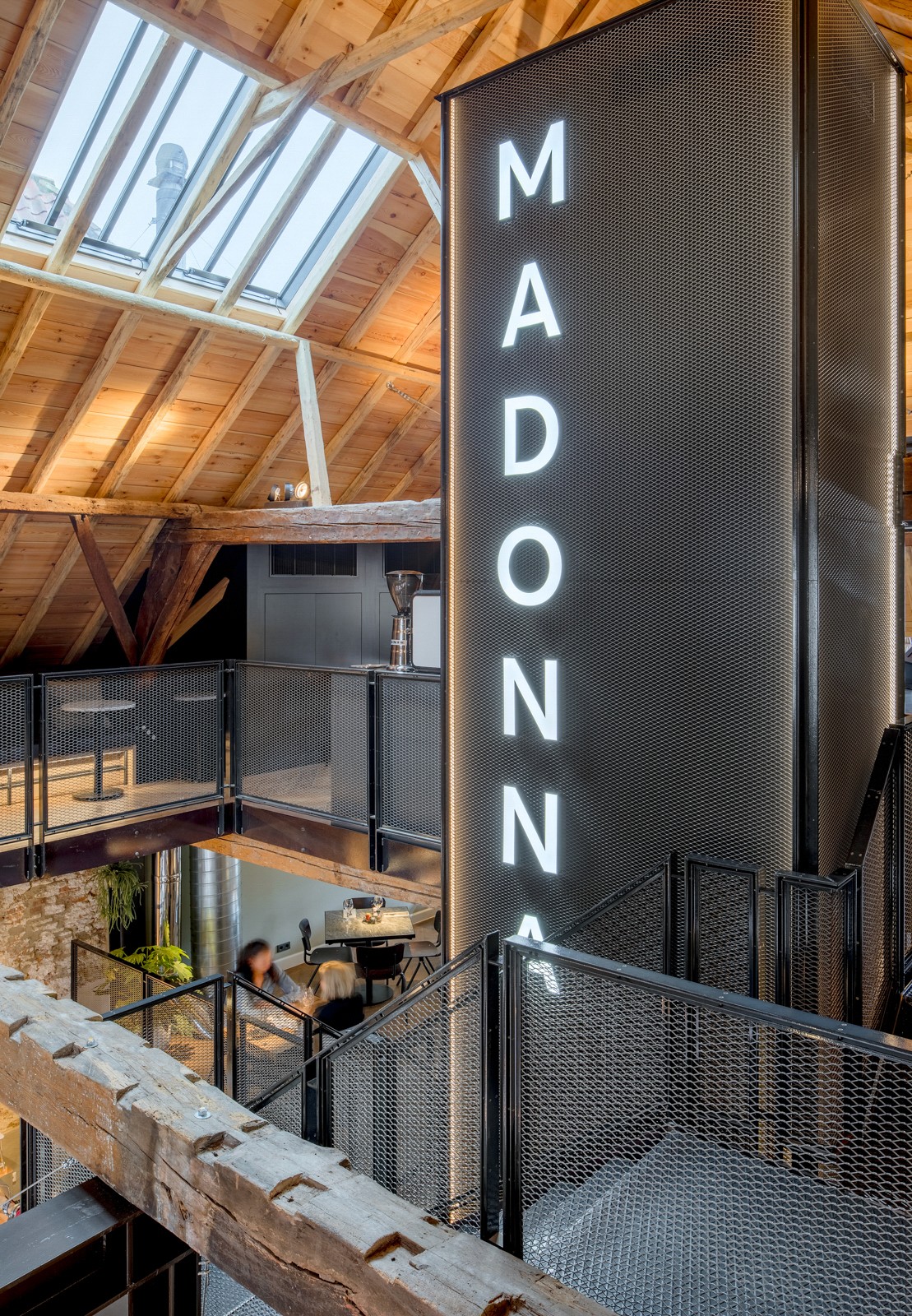
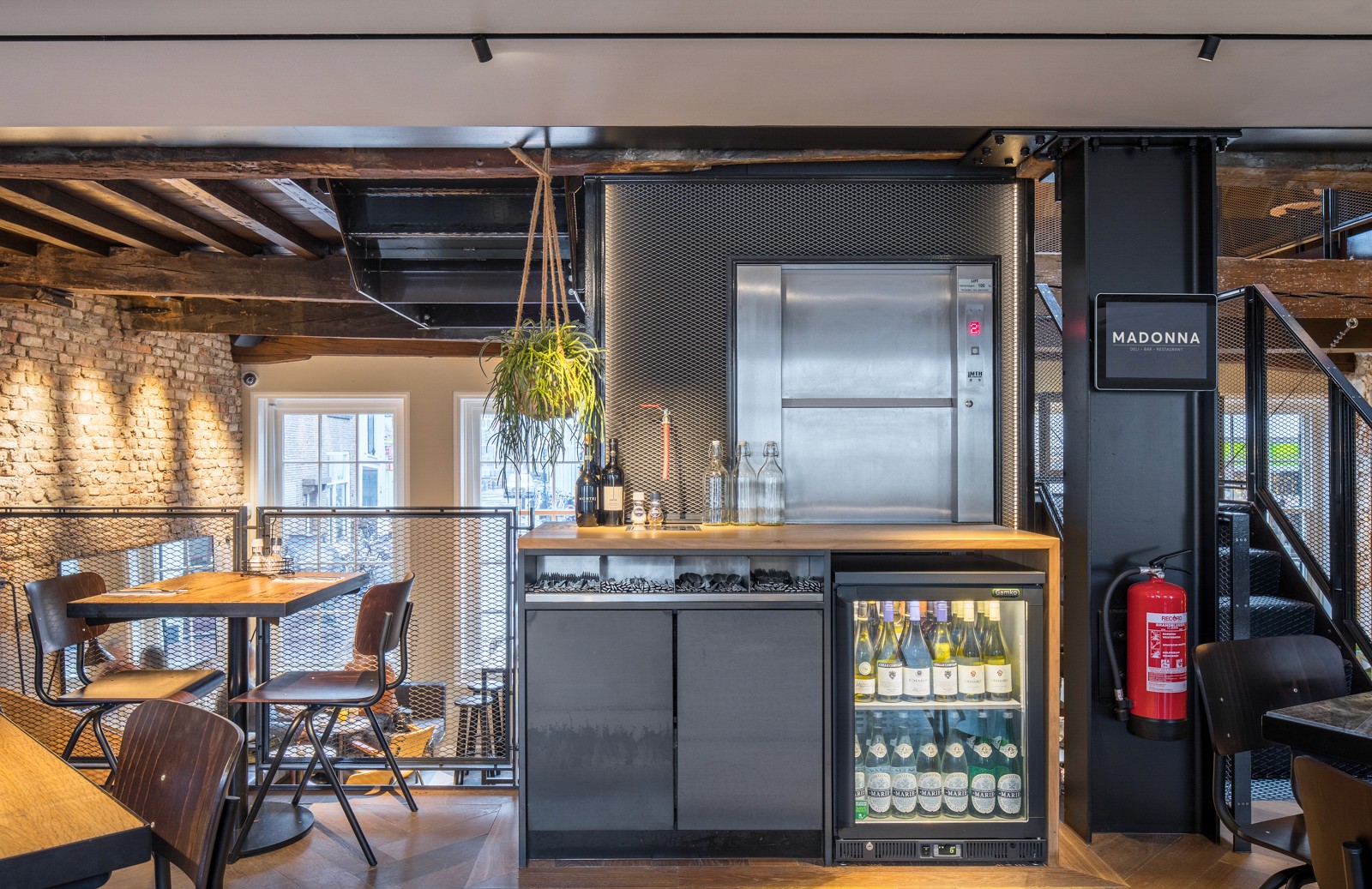
To preserve as much of the historical context as possible, the strategy has been to leave all the monumental exterior walls untouched. By introducing a new core that manages the bars and the restaurant's access, Positive Space has succeeded in enhancing the spatiality of the building. Centrally located within the core is the goods lift, clad in expanded metal. The core is also used to structurally reinforce the building.
Around the core, bars and cutlery stations are situated on the various levels. Additionally, the stairs surrounding the core connect all the split-level floors, culminating in a large atrium that links the impressive roof with the underlying floors. This design fosters numerous sightlines within the interior, promoting social interaction and providing the space with a pleasing scale.
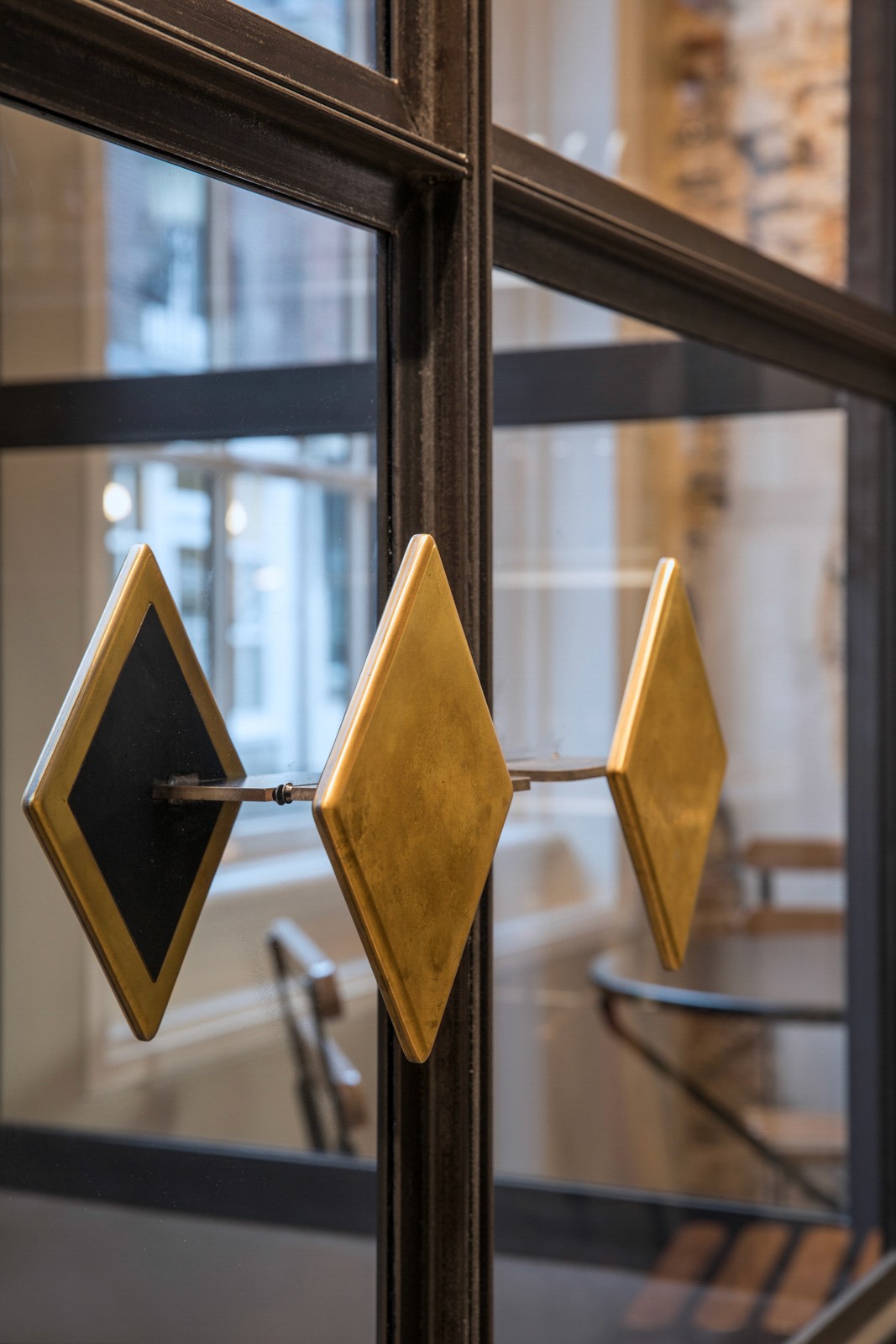
In the design, the core, the bars, and the stairs are conceived as a unified whole, seamlessly flowing into one another. The bars are clad in planed oak and feature a solid oak bar top. The core and stairs are constructed in steel, with both the expanded metal and the anti-slip profiles of the steps designed with diamond patterns.
The smart core
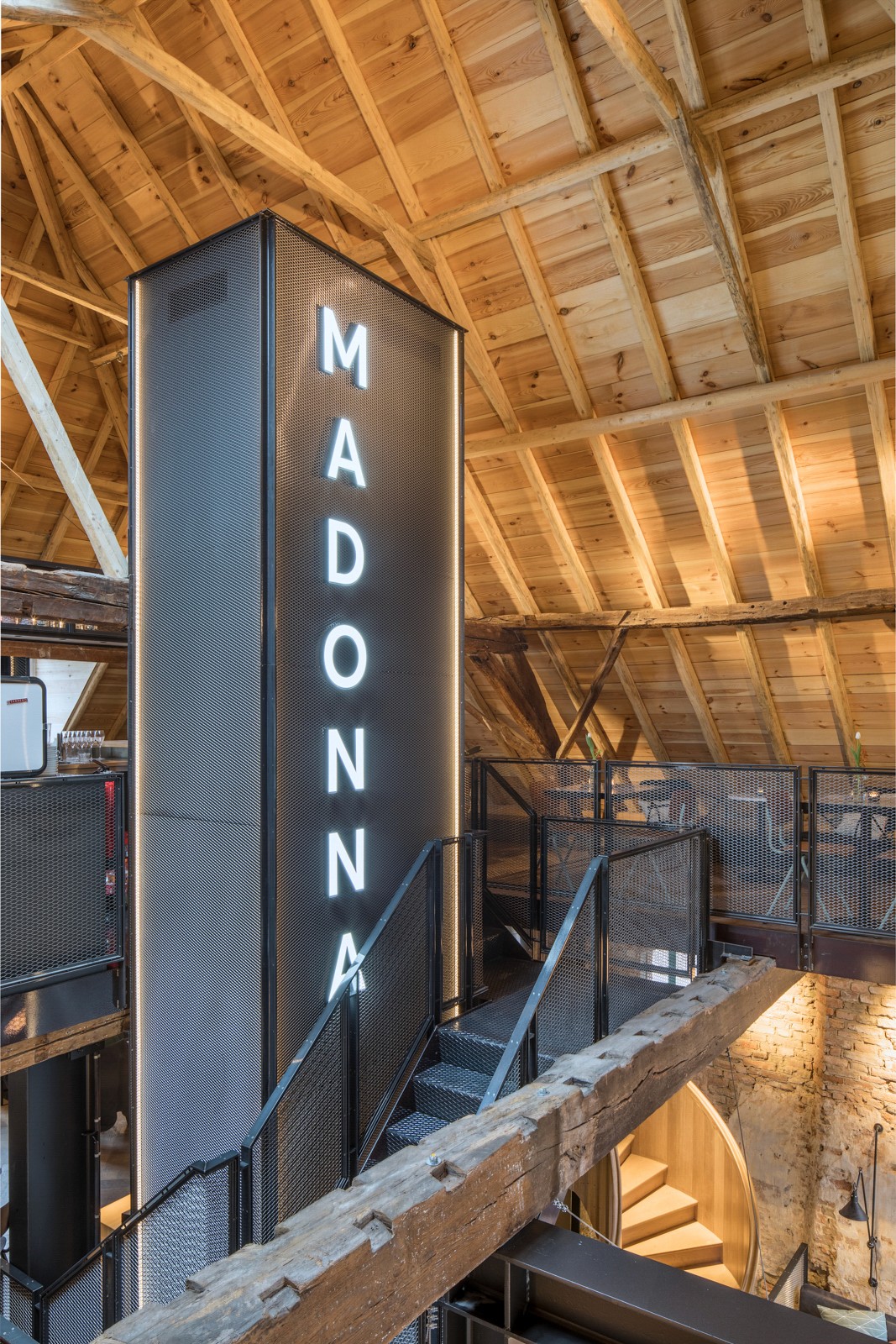
To preserve as much of the historical context as possible, the strategy has been to leave all the monumental exterior walls untouched. By introducing a new core that manages the bars and the restaurant's access, Positive Space has succeeded in enhancing the spatiality of the building. Centrally located within the core is the goods lift, clad in expanded metal. The core is also used to structurally reinforce the building.
Around the core, bars and cutlery stations are situated on the various levels. Additionally, the stairs surrounding the core connect all the split-level floors, culminating in a large atrium that links the impressive roof with the underlying floors. This design fosters numerous sightlines within the interior, promoting social interaction and providing the space with a pleasing scale.
In the design, the core, the bars, and the stairs are conceived as a unified whole, seamlessly flowing into one another. The bars are clad in planed oak and feature a solid oak bar top. The core and stairs are constructed in steel, with both the expanded metal and the anti-slip profiles of the steps designed with diamond patterns.
The smart core
To preserve as much of the historical context as possible, the strategy has been to leave all the monumental exterior walls untouched. By introducing a new core that manages the bars and the restaurant's access, Positive Space has succeeded in enhancing the spatiality of the building. Centrally located within the core is the goods lift, clad in expanded metal. The core is also used to structurally reinforce the building.
Around the core, bars and cutlery stations are situated on the various levels. Additionally, the stairs surrounding the core connect all the split-level floors, culminating in a large atrium that links the impressive roof with the underlying floors. This design fosters numerous sightlines within the interior, promoting social interaction and providing the space with a pleasing scale.
In the design, the core, the bars, and the stairs are conceived as a unified whole, seamlessly flowing into one another. The bars are clad in planed oak and feature a solid oak bar top. The core and stairs are constructed in steel, with both the expanded metal and the anti-slip profiles of the steps designed with diamond patterns.